
-
Abravanel’s World of Torah
is an enticingly innovative yet thoroughly loyal rendition of a major fifteenth-century Hebrew classic.
For the first time, Don Yitzchak Abravanel’s Bible commentary has become accessible IN ENGLISH.
Abravanel’s World of Torah: Series
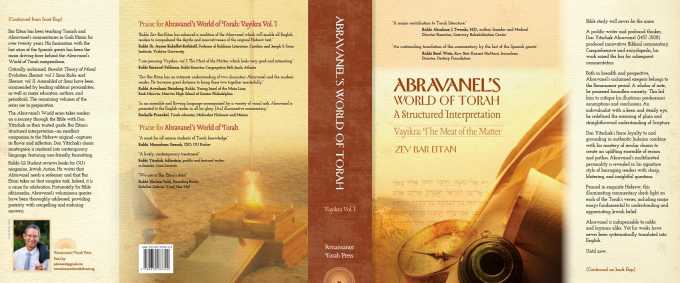
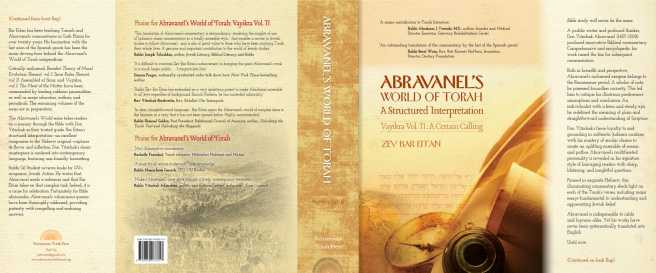
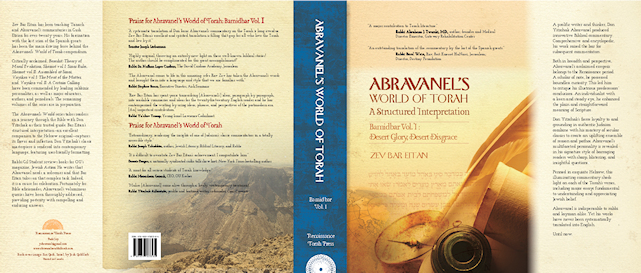
The book of Joshua
-
Joshua 18: Joshua Apportions Out Canaan
During the fourteen years of fighting and apportioning Canaan to the twelve tribes, the Tent of
Meeting had rested in Gilgal. Now, with most of the Holy Land in Hebrew hands, Joshua
transported the Tabernacle to Shiloh. There it would remain for three hundred and sixty-nine
years, as recorded in an ancient Jewish source.“And the whole congregation of the Children of Israel assembled themselves
together at Shiloh, and set up the Tent of Meeting there; and the land was
subdued before them.”Joshua 18 deals with the final stages of completing the dividing of Israel among the twelve
tribes. But not before some drama set in. “And there remained among the Children of Israel
seven tribes, which had not yet received their inheritance. And Joshua said unto the Children of
Israel: How long are you slack to go in to possess the land, which the LORD, the God of your
fathers, has given you?”Clearly, Joshua was miffed at the seven tribes who had shown indolence about inheriting and
settling their respective lands. Joshua prodded. “Appoint for you three men for each tribe; and I
will send them, and they shall arise, and walk through the land, and describe it according to
their inheritance; and they shall come unto me.”Joshua commissioned tribal representatives to survey the Holy Land. Surveys helped create a
master plan, in a manner of speaking. With it, Joshua could continue – and complete – the
apportionment of the land. As stated elsewhere, Joshua had not acted unilaterally. He
corroborated with the tribal princes. And, of course, he was aided by Heaven via the casting of
lots. “And they shall divide it into seven portions: Judah shall abide in his border on the south,
and the house of Joseph shall abide in their border on the north. And you shall describe the
land into seven portions, and bring the description hither to me; and I will cast lots for you here
before the LORD our God.”Abravanel fills in the gaps. Why had the seven tribes dragged their feet and been lax about
gaining a foothold in the Holy Land, touching off a brouhaha with Joshua in the first place? His
explanation follows.At root, the reason for the seven tribes’ lack of alacrity had to do with fighting Canaanites; they
weren’t keen to battle them. Land division or apportionment could only take place when each
tribe defeated the locals. Hence, the tribes’ lack of gumption and hence Joshua’s disgust.“And Joshua said unto the Children of Israel: How long are you slack to go in to possess the
land…” Joshua would have none of it. He took the initiative by sending out tribal agents to
survey Israel. In contrast to some tribes’ fearfulness, other tribes showed pluck. “And they shall
divide it into seven portions: Judah shall abide in his border on the south, and the house of
Joseph shall abide in their border on the north.” Owing to Judah and Joseph’s valor and
gallantry, they are mentioned here. Their respective tribes took the initiative, and battled
Canaanites occupying their territories, a subject discussed in previous chapters. They attest to
their fearlessness and eagerness to oust enemy forces.Abravanel continues, questioning why Joshua sought to “divide it into seven portions?” Simple
math, really. Judah, Ephraim, and half of Manasseh had already taken hold of their portion in
Israel. Reuben, Gad, and the second half of Manasseh had settled land on the east bank of the
Jordan. That equals five tribes. Twelve tribes minus five, leaves us with the final seven that
needed, shall we say, a push. Levites had not received territory in the Holy Land, “For the
Levites have no portion among you, for the priesthood of the LORD is their inheritance.” Joshua
18, then, describes the final stages of the apportionment of Canaan. -
Introduction to the Book of Joshua
Abravanel’s introduction to the Book of Joshua comprises two parts. Here, we focus on one aspect of the first part –
a breakdown of the Bible’s three sections: Torah, Prophets, and Writings. What, he asks, lies behind the
names that the Jewish sages ascribed? What wisdom can be gleaned from those very names – “Torah”,
“Prophets”, and “Writings?” For example, what can Bible students learn from the Five Books of Moses
called “Torah?” The same thoughtful questioning goes for “Prophets” and “Writings?” After all, aren’t all
three parts of the Bible written down, thus each one is “Writings?” Similarly, isn’t Torah written by
Moses, the prophet par excellence? Given that fact, shouldn’t “Torah” also be included in “Prophets”,
and not set apart from it?Abravanel begins with what does NOT separate or distinguish Torah from Prophets or Writings.
Common to them is the fact that they cover historical events, accurately recording bygone eras.
Furthermore, common to them are sections which foretell future happenings.The crux of the matter is this, Abravanel asserts. What makes Torah stand out is its main subject matter:
divine commandments. No other seer has handed down heavenly directives.Bold and underscore: No successive prophet after Moses transmitted a single, novel command.
Accordingly, the term Torah, meaning instruction, is exclusively reserved for the Five Books of Moses.As for the Bible’s middle section’s name – Prophets – Abravanel offers this. In fact, each prophet from
Joshua to Malachi all achieved prophecy, and hence their respective books are subsumed under
“Prophets.” Owing to Moses’ unique status among those with whom God communicated, as stated
above, the Torah is not part of Prophets.Abravanel continues, moving to Writings. This last section of the Bible was not written, technically
speaking, by prophets. While the authors of Psalms, Song of Songs, Esther etc. had attained stunning
accomplishment in their respective works, they had not been granted prophecy from Above. Their
crowning accolade of understanding rates a notch below prophecy, marked as “the spirit of holiness” or
divine inspiration. Thus, those authors’ holy books do not belong to Prophets.As Abravanel argues, those people who penned Writings had been irresistibly driven to put pen to
paper. They created magnificent, timeless works. Compulsion, per se, goaded them to write down their
words. Consequently, their work product is categorized as “Writings.” And of course, Writings has been
distinguished from Torah, for the reason stated above. Namely, Torah is unique and exclusive to Moses,
insofar as he alone among the prophets and divinely-inspired authors had been given commandments
by the Almighty. In sum, Abravanel’s prefatory remarks will hold students in good stead as they open
the Bible, and can better understand the ancient’s tripartite delineation of Scripture. -
Joshua 1: Bolstering Joshua
“Now it came to pass after the death of Moses the servant of God, that God
spoke unto Joshua the son of Nun, Moses' minister, saying: Moses My servant is
dead. Now therefore arise, go over this Jordan…”With the passing of Moses, the mantle of leadership devolved upon Joshua, the prophet’s
staunch disciple. Abravanel notes that within the duration of Joshua 1, there is one phrase that
gets reiterated on three distinct occasions. They follow.- “Be strong and of good courage, for you shall cause this people to inherit the land which
I swore unto their fathers to give them” - “Only be strong and very courageous, to observe to do according to all the law, which
Moses My servant commanded you. Turn not from it to the right hand or to the left…” - “Have not I commanded you? Be strong and of good courage. Be not affrighted…”
Why the reiteration, Abravanel asks? Building upon his predecessors, he delineates three
messages the Maker transmitted to Joshua. One, God goads Joshua with regard to the Hebrew
nation. Specifically, the leader not fear them. As a rule, Joshua heard the Maker say, trouble
stirs when it comes to parceling out land, each man jockeying for a bigger piece of the pie. “Be
strong and of good courage, for you shall cause this people to inherit the land…”Joshua would
need to show firmness and stout heart in dealing with the twelve tribe’s respective territory.Two has to do with Joshua’s inner convictions, his religious observance or piety. In that
department, God urges the new leader: “Only be strong and very courageous, to observe to do
according to all the law, which Moses My servant commanded you…”This warning spoke to
Joshua’s character. He needs to curb his desires and earthly pursuits. With abundant strength,
he could muster steely resolve to fulfill divine directives. Citing Ethics of our fathers, Abravanel
brings: “Who is heroic? One who controls his passions." Though self-restraint is important for all
Jews, that trait is all the more so crucial for leaders.Three takes into account Joshua’s role as commander-in-chief. “Have not I commanded you? Be
strong and of good courage. Be not affrighted, neither be you dismayed…” God bids Joshua to
take military control, and not flinch in the face of impending war.Concluding, Abravanel writes that these three exhortations were not totally new to Joshua. The
third warning begins: “Have I not commanded you?”Interestingly, the first two verses quoted
above had not been prefaced with: “Have I not commanded you.”Abravanel learns that God
had not shored up Joshua in the areas of courage to divvy up the Holy Land or Torah
observance. Until now. - “Be strong and of good courage, for you shall cause this people to inherit the land which
-
Joshua 10: Adoni-zedek, King of Jerusalem
“Now it came to pass, when Adoni-zedek king of Jerusalem heard how Joshua
had taken Ai, and had utterly destroyed it, as he had done to Jericho and her
king, so he had done to Ai and her king; and how the inhabitants of Gibeon had
made peace with Israel, and were among them; that they feared greatly,
because Gibeon was a great city, as one of the royal cities, and because it was
greater than Ai, and all the men thereof were mighty.”Without a tad of hyperbole, Joshua 10 records one of the Bible’s most mind-bending miracles: the day
God stopped the sun in its tracks. That episode takes place midway through the chapter. Of course, it
dominates the vast majority of Abravanel’s lengthy commentary on Joshua 10, as he fully analyzes the
subject of a suspended sun.For our purposes here, however, we will share Abravanel’s thoughts on what precipitated the stilling of
the sun? “Now it came to pass, when Adoni-zedek king of Jerusalem heard…”Abravanel enters the king
of Jerusalem’s headspace, as it were. What had he heard, or better extrapolated, that so terribly frazzled
him, unnerving him?In Joshua 9, we discussed Joshua’s agreement with the people of Gibeon. To say that the news didn’t go
down well with all the kings, but particularly with Adoni-zedek, would be quite the understatement; it
mortified them.Gibeon’s move did more. It electrified an entire region of Israel. “Wherefore Adoni-zedek king of
Jerusalem sent unto Hoham king of Hebron, and unto Piram king of Jarmuth, and unto Japhia king of
Lachish, and unto Debir king of Eglon, saying: Come up unto me, and help me, and let us smite Gibeon;
for it has made peace with Joshua and with the Children of Israel.”Abravanel scrutinizes Gibeon’s perfidy, according to Jerusalem’s King Adoni-zedek, who spearheaded
the operation to punish Gibeon and served as the de facto ruler in that part of Israel. Why all the
indignation? Four aspects of Gibeon’s conduct turned his majesty’s – and his allies’ – royal stomach(s).- King Adoni-zedek “heard how Joshua had taken Ai, and had utterly destroyed it, as he had done
to Jericho.”Common decency, he bellowed, dictated that any self-respecting Canaanite show
loyalty to their fallen brethren. Comradery should have mobilized Gibeon (and others) to seek
revenge. Yet, “Gibeon had made peace with Israel.” Making peace, seen from that prism,
represented more than a moral shortcoming; it was unconscionable. How could Gibeon stoop so
low, the king seethed? - Next, Adoni-zedek resolved to punish Gibeon. He heard, what Joshua “had done to Jericho and
her king, so he had done to Ai and her king.”The king of Gibeon, recall from Joshua 9, was in the
midst of drawing up battle plans to fight the Jews. How, the five kings’ alliance shuddered to
think, could the Gibeonites betray their own king. Going behind their sovereign’s back cannot be
condoned, let alone tolerated. Conspirators! cried the kings. The king of Jerusalem, the architect
of the plan to wipe out Gibeon, had more on his mind. Perhaps, he wondered, his own people
sought a side deal with Joshua. - King Adoni-zedek further assessed that the Hebrews faced a logistics nightmare. That is, an
invading force of that magnitude, together with their wives and children would soon run out of
food and pasture land for their livestock, if war dragged on. Moreover, the Jews stared at an
acute housing crisis. That is because Jericho had been permanently set off limits by Joshua. As
for Ai, it had been burned to the ground. Gibeon’s peace accord, essentially, tossed a lifeline to
Joshua. In military terms, Gibeon’s volte face enabled the Jews to keep fighting. Our chapter
describes Gibeon as “a great city, as one of the royal cities.”They would offer Jews some
logistical relief, by selling Hebrews much needed food and supplies. - Jerusalem’s monarch dreaded to think that Gibeon could do the unthinkable, as our chapter
puts forth: “That they feared greatly, because Gibeon was a great city…and because it was
greater than Ai.” Outrageous, the king huffed. How could Gibeon just roll over, without armed
resistance?
Here, then, is Abravanel’s close reading of the verses. It helps Bible students better understand just how
despicable and cowardly were Gibeonites, in Adoni-zedek’s eyes. They were nothing more than driveling
yellow bellies. “Wherefore Adoni-zedek king of Jerusalem sent unto Hoham king of Hebron, and unto
Piram king of Jarmuth, and unto Japhia king of Lachish, and unto Debir king of Eglon, saying: Come up
unto me, and help me, and let us smite Gibeon; for it has made peace with Joshua and with the Children
of Israel.”In sum, the king of Jerusalem together with his allies would march on Gibeon, thereby
showing zero-tolerance toward all turncoats. That’s when Joshua stepped up on the side of the
Gibeonites. Joshua 10 proceeds to record the Jew’s route of the five kings, assisted by God Who paused
the sun from setting, allowing Joshua to complete the military victory. - King Adoni-zedek “heard how Joshua had taken Ai, and had utterly destroyed it, as he had done
-
Joshua 11: All the Kings’ Horses and Chariots
As we read in Joshua 11, Jabin king of Hazor was the ringleader; he charged Canaanite
chieftains to clasp hands and fight the Jews. Naturally, the sheer masses of the unified army
concerned Joshua. Dispelling the Jewish leader’s fears, encouragement to came from Above.“And it came to pass, when Jabin king of Hazor heard thereof, that he sent to
Jobab king of Madon, and to the king of Shimron, and to the king of
Achshaph…and the Canaanite…and the Amorite, and the Hittite, and the
Perizzite, and the Jebusite…and the Hivite…. And they went out, they and all
their hosts with them, much people, even as the sand that is upon the seashore
in multitude, with horses and chariots very many.”“And the LORD said unto Joshua: Be not afraid because of them, for tomorrow at this time will I
deliver them up all slain before Israel. You shall maim their horses and burn their chariots with
fire.”Abravanel explains God’s command to Joshua – “maim their horses and burn their chariots.” He
points out that in the earlier battles, no such heavenly directive had been issued. Why here?King Jabin of Hazor received news of Joshua’s defeat of the five kings (Joshua 10). Quickly he
gathered allies, armies replete with a cavalry and charioteers.Seemingly, Abravanel posits, Jabin and company presumed they could beat Joshua, if only they
implemented the right strategy. Hence, Jabin brought to bear innumerable fighters (“even as
the sand that is upon the seashore”) and war material (“horses and chariots”).There was, of course, a rationale or method behind Jabin’s thinking. He noted that the five
kings (Joshua 10) hadn’t enlisted every last man, nor had they introduced horses and chariots.
Hazor’s king, he thought, had it all figured out. Mounting a sea of soldiers and horses and
chariots would prove unstoppable.Jabin’s plan rattled the Hebrew’s camp. Thus, God shored up Joshua’s and the Jews’ spirits.
“And the LORD said unto Joshua: Be not afraid…for tomorrow at this time will I deliver them up
all slain before Israel.” After assuring Joshua of victory, the Maker went further. He bid the
Jewish commander to “maim their horses and burn their chariots.”What did God have in mind? According to Abravanel, since the king of Hazor put faith in his
large army and cavalry, the Creator wanted to teach Jabin a lesson. Really, He wanted to mock
the monarch. Seeing immobilized horses and a charred ash pile of chariots would knock some
sense into the regent. Abravanel adds another motivation to God’s command to debilitate the
horses and torch the chariots – it was meant to school the Jews. Namely, the Chosen People
should not place their trust in weaponry or armaments. Faith in the Almighty, and only in Him
would be an article of Jewish creed for the ages, as penned by King David in Psalms 3:
“Salvation belongs unto the LORD…”After Joshua’s victory, the Hebrews occupied the cities of all of the participating kings. Well,
almost all of the cities. “But as for the cities that stood on their mounds, Israel burned none of
them, save Hazor only – that did Joshua burn.”Abravanel teaches why Hazor, of all the cities,
was given “special” treatment. It stresses Jabin’s pivotal role in the military offensive; it was his
brainchild. How apt, then, to burn Hazor to the ground. All future kings who followed Jabin’s
example were put on notice. And even if a king would be foolhardy enough to emulate Jabin’s
example, that king’s subjects would know better. They would remind their “highness” of
Hazor’s fate, and put up a robust, anti-government protest. -
Joshua 12: Moses and Joshua/Part One
“Now these are the kings of the land, whom the Children of Israel smote, and
possessed their land beyond the Jordan toward the sunrising, from the valley of
Arnon unto mount Hermon, and all the Arabah eastward: Sihon king of the
Amorites, who dwelt in Heshbon, and ruled from Aroer, which is on the edge of
the valley of Arnon, and the middle of the valley, and half Gilead, even unto the
river Jabbok, the border of the children of Ammon…”Joshua 12 neatly narrates the Hebrews’ sweeping victories, both on the east and west sides of
the Jordan River. The chapter leads with Moses’ wins; whereas the balance of the verses
conveys Joshua’s victories. Abravanel notes anomalies in the way the wars are recorded. When
it comes to Moses’ campaigns on the east bank, much detail of the newly-acquired territory is
provided. “Sihon king of the Amorites, who dwelt in Heshbon, and ruled from Aroer, which is on
the edge of the valley…and half Gilead, even unto the river Jabbok…and the Arabah unto the
sea of Chinneroth, eastward, and unto the sea of the Arabah, even the Salt Sea, eastward, the
way to Beth-jeshimoth; and on the south, under the slopes of Pisgah.”That was only half of Moses’ military feat. Next, verses cover King Og. “And the border of Og
king of Bashan, of the remnant of the Rephaim, who dwelt at Ashtaroth and at Edrei, and ruled
in mount Hermon, and in Salcah, and in all Bashan…”Stylistically, we observe how the above-
mentioned verses give readers plenty of information regarding Moses’ achievements.At the conclusion of the Moses section, let us call it, Joshua gives a shout out to the grand
prophet. “Moses the servant of the LORD and the Children of Israel smote them; and Moses the
servant of the LORD gave it for a possession unto the Reubenites, and the Gadites, and the half-
tribe of Manasseh.”Abravanel compares the Moses section to that of Joshua. He notes, as stated, two differences.
He also offers a rationale for those differences. The Joshua section begins, “And these are the
kings of the land whom Joshua and the Children of Israel smote beyond the Jordan westward,
from Baal-gad in the valley of Lebanon even unto the bare mountain, that goes up to Seir; and
Joshua gave it unto the tribes of Israel for a possession according to their divisions; in the hill-
country, and in the Lowland, and in the Arabah, and in the slopes, and in the wilderness, and in
the South; the Hittite, the Amorite, and the Canaanite, the Perizzite, the Hivite, and the
Jebusite.” Following this, the Joshua section offers a skimpy version and coverage of his
victories. “The king of Jericho, one; the king of Ai, which is beside Beth-El, one; the king of
Jerusalem, one; the king of Hebron, one…” In this manner we skim over how Canaan was taken
by Joshua and the Jewish warriors. The section concludes: “the king of Tirzah, one. All the kings
thirty and one.”Why, Abravanel asks, does the chapter give far greater detail to Moses, concluding with the
prophet’s divvying up those lands to Reuven, Gad, and Menasseh? However, when it comes to
Joshua, the leader gets mentioned prior to the chronology of his wins. And, as stated,
practically zero description of the newly-garnered lands are provided.Here is Abravanel’s takeaway. Sensitivity to Moses features front and center. Moses defeated
two kings (Sihon and Og) versus Joshua, who took down thirty-one kings. Blatantly, numbers
alone bespeak lopsided legacies. If there would not have been greater detail accorded to
Moses, it would have been a slight to his honor. That’s one possibility.Here is a second one. Even though Moses conquered only two kings – Sihon and Og – his
victories rate as remarkable as Joshua’s, owing to Moses’ foes’ formidable might. In
comparison, Joshua’s adversaries, although quantitatively greater than Moses’, had not been as
plucky. In sum, Moses’ liberation of the east bank reached parity with Joshua’s on the west
bank. -
Joshua 13: Moses and Joshua/ Part Two
“Now Joshua was old and well stricken in years; and the LORD said unto him:
You are old and well stricken in years, and there remains yet very much land to
be possessed… Only unto the tribe of Levi he gave no inheritance; the offerings
of the LORD, the God of Israel, made by fire are his inheritance, as He spoke unto
him.”According to Abravanel, Joshua 13, again, teaches that Joshua intended to illustrate similarities
between him and Moses, his mentor. To begin with, consider their respective military
accomplishments. Namely, despite Moses’ wildly impressive wins over Sihon and Og,
nonetheless, some work had gone unfinished. Regarding Moses, Joshua records, “Nevertheless
the Children of Israel drove not out the Geshurites, nor the Maacathites…”Though military work on the east bank needed some work, this had not stopped Moses from
apportioning out liberated lands to the three tribes. “And Moses gave unto the tribe of the
Children of Reuben according to their families…”Joshua’s path followed his Moses’ precedent,
meaning that he portioned out liberated territories, though the job had been unfinished. “And
the LORD said unto him…and there remains yet very much land to be possessed…This is the
land that yet remains: all the regions of the Philistines, and all the Geshurites…”Hence, we
read: “And these are the inheritances which the Children of Israel took in the land of Canaan,
which Eleazar the priest, and Joshua the son of Nun, and the heads of the fathers; houses of the
tribes of the Children of Israel, distributed unto them.”For Abravanel, Joshua 13 suggests another likeness between mentor and disciple. It has to do
with the way Moses and Joshua approached settling the Levites and setting aside their living
arrangements. As the Torah lays out, Levites were meant to receive territorial concessions from
the other tribes in order to set up home. These areas are known as Levitical cities, and they dot
Canaan’s map. Importantly, Levitical cities were also designated on the east bank of the Jordan
River. However, Moses had not established Levitical cities within Rueben’s, Gad’s, and
Manasseh’s territories. “Only unto the tribe of Levi he gave no inheritance; the offerings of the
LORD, the God of Israel, made by fire are his inheritance, as He spoke unto him.” Not only had
Moses not earmarked Levitical cities on the east bank, but he also had not set aside farmland
and vineyards for them. So, too, with Joshua. He had not settled Levites in the west bank.
Though apportioning lands to the tribes, he had not addressed the housing/agricultural needs
of the Levites, leaving them to be the last tribe to receive their fair due.Abravanel ventures a rationale for putting Levites last. Recall, Levites had been tasked with
caring for and transporting the holy ark, which held the written covenant. Given the Levites’
responsibility for and association with the holy ark, it fits that they should share the ark’s fate.
That is, the Levites would not be settled in their cities as long as the ark had not been placed in
its home. Only after the holy ark had found its home in Shiloh, and after the tribes settled their
territories, had Levites been given a green light to set up house and garden. -
Joshua 14: Caleb, Son of Jephunneh
Nearly equal in coverage, in terms of a verse count, Joshua 14 discusses two topics. The first one
pertains to the methodology by which the Hebrews took possession of the Holy Land. Caleb takes up the
latter part of the chapter. Owing to the sheer length and intricacy of Abravanel’s discussion of the
section dealing with tribal allocation, we will leave that for another essay. Here we share Abravanel’s
explanation of Caleb and Judah’s petition to Joshua to take possession of Hebron, the city of the
patriarchs and matriarchs.“Then the children of Judah drew nigh unto Joshua in Gilgal. And Caleb the son
of Jephunneh the Kenizzite said unto him: You know the thing that the LORD
spoke unto Moses the man of God concerning me and concerning you in Kadesh-
barnea.”“Then the children of Judah drew nigh unto Joshua…” Caleb served as his tribe’s spokesman. For good
reason. He and Joshua were among the original spies, whom Moses dispatched to Israel. “Forty years
old was I when Moses the servant of the LORD sent me from Kadesh-barnea to spy out the land. And I
brought him back word as it was in my heart. Nevertheless, my brethren that went up with me made the
heart of the people melt, but I wholly followed the LORD my God.”Caleb’s petition was a plea to take possession of Hebron, quite the prize. Abravanel asks: Had Hebron
been a separate request, outside of other territory to be slotted to Judah? Or alternatively, was Hebron
part and parcel of the children of Judah’s greater land mass? Further, Abravanel probes, had that region
of Israel been matched up to Judah via the lottery system, as was the methodology by which the other
tribes took possession of their respective territories? For if Joshua, Caleb, and the children of Judah “cut
a private deal”, then it surely smelled of bad optics – if not worse. Indeed, Abravanel fearlessly sets the
high bar in asking these questions.“Then the children of Judah drew nigh unto Joshua…” Though Caleb alone petitioned Joshua for Hebron,
he appeared before Joshua accompanied by fellow tribesmen. Their presence both bolstered Caleb’s
prestige, as well as aided in the success of the outcome, mission.More than the tribe’s spokesman, Caleb had served as Judah’s tribal chief. For Abravanel, to place this
event along chronological terms, it occurred during the fighting for Israel’s liberation. That despite its
placement here, après-guerre.To Abravanel, several elements of Caleb’s presentation seem strange. We mention a few items, before
getting to the upshot. One, even though Caleb prefaces, “You know the thing that the LORD spoke unto
Moses the man of God concerning me and concerning you in Kadesh-barnea”, he doesn’t elaborate.
Certainly, “And Moses swore on that day, saying: Surely the land whereon your foot has trodden shall be
an inheritance to you and to your children forever” cannot be construed as “the thing that the LORD
spoke.”For if it was, the information would be superfluous.Two, what’s the significance of Caleb infusing historical context: “Forty years old was I when Moses…”
And if Caleb was twenty-five or sixty-five, does his age impact anything? Or three, “And I brought him
back word as it was in my heart.” Isn’t that identical with: “My brethren that went up with me made the
heart of the people melt, but I wholly followed the LORD my God.”Here is Abravanel’s takeaway, a straightforward approach to better understand our chapter’s verses.
After the spies returned from their mission, Caleb begged a private word with Moses. He confirmed the
majority’s conclusions. Namely, giants had roamed Canaan; cities had impregnable walls and
fortifications; and as for the Canaanites, well, they were tough as nails. Thus, Caleb collaborated his
colleagues’ findings privately to Moses – to a T.Undoubtedly, military disadvantage lay foremost in Caleb’s mind. Nonetheless, his words came out
differently. Much differently. “But I wholly followed the LORD my God.”To the Hebrews in the desert,
Caleb showed resilience, religious backbone. “If the LORD delight in us, then He will bring us into this
land, and give it unto us--a land which flows with milk and honey”(Numbers 14). In our chapter, Caleb
recalled: ”But I wholly followed the LORD my God.” In contrast to the majority of spies, who “made the
heart of the people melt”, Caleb projected confidence. That is, for Moses’ ears only, Caleb reported the
facts garnered by the other spies. However, and this is crucial, to the Hebrew camp, Caleb spoke
comfortingly. “I wholly followed the LORD.”Caleb’s faith shone, trumping his intellect, his cognitive dissonance. In this manner, he publicly sanctified
God’s name. Put differently, though his head brought him to one conclusion, his soul another. That is
the meaning of the verse in Numbers 14: “But My servant Caleb, because he had another spirit with
him, and has followed Me fully, him will I bring into the land whereinto he went; and his seed shall
possess it.” -
Joshua 15: Caleb and Daughter Achsah
Abravanel writes that after Caleb petitioned Joshua for Hebron, and after Caleb took possession of it,
Joshua saw fit to begin the lottery system for divvying up Israel among the tribes. First to receive their
real estate in Canaan was the tribe of Judah. Joshua, who of course did not know where Judah’s borders
would fall, was more than curious to see what Heaven had in mind. Specifically, Abravanel learns,
Joshua was keen to know if Judah’s territory would abut Hebron, or be miles away from it. In other
words, Joshua had been eager to learn if Caleb, prince of Judah, would dwell in Hebron apart from his
tribesmen, or not.“And the lot for the tribe of the Children of Judah according to their families was
unto the border of Edom, even to the wilderness of Zin southward, at the
uttermost part of the south.”God’s answer came swiftly to Joshua. “And the lot for the tribe of the Children of Judah…was until the
border of Edom, even to the wilderness of Zin southward…” Divine providence smiled upon Caleb and
the tribe of Judah. Hebron would not be isolated. Rather, it would be nestled well within the tribe’s
boundaries. “And unto Caleb the son of Jephunneh he gave a portion among the Children of Judah,
according to the commandment of the LORD to Joshua, even Kiriath-arba, which Arba was the father of
Anak--the same is Hebron.” It also served to affirm providence’s nod to Joshua’s pledge to give Hebron
to Caleb.Abravanel explained elsewhere that Hebron should not be viewed as an extra-territorial grant. Instead,
it was an integral component of Judah’s overall holdings. Owing to Judah’s large population, it needed
space. Lots of it.Regarding Hebron, Caleb had not petitioned the holy city of the patriarchs for personal aggrandizement.
He had altruistic motivation at heart. This has been discussed in the previous essay. In brief, the mighty
Caleb valiantly led his troops to liberate Israel’s south. “And Caleb drove out thence the three sons of
Anak, Sheshai, and Ahiman, and Talmai, the children of Anak. And he went up thence against the
inhabitants of Debir--now the name of Debir beforetime was Kiriath-sepher.” Abravanel says that Caleb
set his sights on Debir, because it lay in close proximity to Hebron. Hence, he sought to secure the holy
city.Mighty, Caleb was. But he was aging. Leading troops became increasingly burdensome, and so he
offered a reward. “And Caleb said: He who smites Kiriath-sepher, and takes it, to him will I give Achsah
my daughter to wife.”The offer, not surprisingly, has been criticized by commentators. What, they
wrote, if the man who smote Kiriath-sepher was a lout? Is that what a father would want for a
daughter?How did things develop? Again, providence smiled on old Caleb and his daughter Achsah. “And Othniel
the son of Kenaz, the brother of Caleb, took it; and he gave him Achsah his daughter to wife.” No sooner
had the couple wed than Achsah came up with a plan. “And it came to pass, when she came unto him,
that she persuaded him to ask of her father a field. And she alighted from off her ass; and Caleb said
unto her: What would you like?”Imminently, Achsah would ask her father for a blessing in the form of land. Why, Abravanel asks, did she
need to dismount her donkey to ask a favor? Surely, she could have asked from the comfort of her
saddle.Here is Abravanel’s approach to Caleb and Achsah. “And it came to pass, when she came unto him, that
she persuaded him to ask of her father…” Back in the day, it was frowned upon for women to ask
something of their fathers or husbands, unless given permission by the husband to do so. Because
Achsah was a worthy woman, and conformed to societal norms, she asked and received permission
from Othniel, her husband. In fact, as stated, they were newlyweds: “And it came to pass, when she
came unto him, and that she persuaded him…”Achsah, in other words, persuaded Othniel to allow her
to make a request of her father Caleb.Circling back, Abravanel offers two reasons why Achsah dismounted before speaking to her father.
Possibly, she alighted in order to “butter up dad.” After all, she was about to ask for a significant gift.
Alternatively, she sprang off her donkey because she had been absorbed in thought, concentrating on
how to formulate her request.Be that as it may, a tumbling daughter grabbed father’s attention. “And Caleb said unto her: What
would you like?”To this, “And she said: Give me a blessing, for that you have set me in the Southland,
give me therefore springs of water.”Achsah pleaded for “the blessing” insofar as her land holdings were
arid, lacking water resources. To his daughter’s request, Caleb agreed. “And he gave her the Upper
Springs and the Nether Springs.” -
Joshua 16: Joshua and Joseph
Joshua 16 covers the subject matter of the second tribe to receive an inheritance in Israel. That would
be Joseph. Abravanel, in a lengthy question, asks about Joshua’s conduct concerning Joseph, deeming it
highly problematic. Our chapter implies that Ephraim had not received his own lottery. Either did
Manasseh. Instead, Joshua combined them, both subsumed under Joseph, their father.“And the lot for the Children of Joseph went out from the Jordan at Jericho, at
the waters of Jericho on the east, going up from Jericho through the hill-country
to the wilderness, even to Beth-el.”Abravanel continues. After Joshua cast a single lot for Joseph, he let Ephraim and Manasseh divide
Joseph’s territory, as they saw fit. “And the Children of Joseph, Manasseh and Ephraim, took their
inheritance.” In short, Joshua grouped both sons together, letting them divvy up property according to
their respective families and clans. Accusingly, Abravanel chooses coarse words: How could Joshua pull
such a rotten maneuver? If Jacob purposely gave firstborn rights to Joseph, entitling him to a double
portion (via Ephraim and Manasseh), why didn’t Joshua honor the patriarch’s express wishes?
Moreover, Abravanel charges, Moses repeatedly counted Ephraim and Manasseh as two bone fide
tribes. That is, the prophet had not thrown them into one pot, per se. Why, then, had Joshua
contravened Jacob’s will? Why had Joshua done differently than Moses, his mentor, who acted
according to the Maker’s dictate? Thus, Abravanel expresses profound surprise that Joshua would
handle matters so ‘poorly.’In closing his question, he cites Ephraim and Manasseh’s gripe: “And the Children of Joseph spoke unto
Joshua, saying: Why have you given me but one lot and one part for an inheritance, seeing I am a great
people, forasmuch as the LORD has blessed me thus” (Joshua 17). Well, what was Joshua thinking?“And the lot for the Children of Joseph went out…”Abravanel learns that Joshua 16 details the metes
and bounds of the two tribes comprising Joseph. Seemingly incidental to the main idea, “Beth-el” in our
lead verse does not refer to the same Beth-el, where centuries earlier, Jacob called out to God. This is
inferred because Jacob’s Beth-el had another name: Luz. The very next verse proves Abravanel’s point:
“And it went out from Beth-el to Luz, and passed along unto the border of the Archites to Ataroth.”Now to Joseph’s territory, per the lottery. “And the Children of Joseph – Manasseh and Ephraim – took
their inheritance.” Regarding Ephraim’s realm, it says: “And the border of the Children of Ephraim
according to their families was thus; even the border of their inheritance eastward was Atroth-addar,
unto Beth-horon the upper.” Next, we read that Ephraim gets a chunk from Manasseh’s territory:
“Together with the cities which were separated for the Children of Ephraim in the midst of the
inheritance of the Children of Manasseh, all the cities with their villages.” (Manasseh’s land will be
discussed in Joshua 17.)Abravanel explains what transpired. Joseph’s sons’ tribes, Ephraim and Manasseh, inherited land next to
each other. That had emerged from the casting of their lots, which proclaimed their respective borders.
To be clear, Joshua 16 does not speak of a division of territory. Instead, it relates to the cities that
Joseph’s two sub-tribes took possession of. So, when Joshua cast a lot for Ephraim and Manasseh –
separately – it identified their respective territories, as Joseph’s.“Together with the cities which were separated for the Children of Ephraim in the midst of the
inheritance of the Children of Manasseh, all the cities with their villages.” It teaches that in addition to
the cities mentioned here – cities deeded to Ephraim – there were more areas within greater Manasseh
that also became Ephraim’s possession. Call these cities, territorial carve-outs within Manasseh lands.
This becomes explicit in Joshua 17. Thus, Abravanel explains Joshua’s conduct is in accord with Moses’ and
Jacob’s guidance. -
Joshua 17: Manasseh’s Men of War
Joshua 17 covers the tribe of Manasseh’s lottery. Recall, in Egypt Joseph was the father of two
sons, Manasseh and Ephraim. Manasseh, though the firstborn, did not receive his lottery for
territory in Israel before Ephraim, his younger brother. Why did Joshua cast a lot for Ephraim
(Joshua 16) before Manasseh? Abravanel asks the question and offers an answer.“And this was the lot for the tribe of Manasseh; for he was the first-born of
Joseph. As for Machir the first-born of Manasseh, the father of Gilead, because
he was a man of war, therefore he had Gilead and Bashan…And there fell ten
parts to Manasseh, beside the land of Gilead and Bashan, which is beyond the
Jordan.”Jacob, when blessing Joseph’s two sons, upended their birth order. To Joseph’s consternation,
his aged father put his right hand on Ephraim, prophetically signaling the younger son’s more
prominent, historic role in comparison to Manasseh: “And he blessed them that day, saying: By
you shall Israel bless, saying: God make you as Ephraim and as Manasseh. And he set Ephraim
before Manasseh” (Genesis 48). In deference to the hoary patriarch, Joshua cast Ephraim’s lot
before Manasseh’s.Next, Abravanel proposes a hypothesis why Manasseh inherited land on both the east and west
banks of the Jordan: “And there fell ten parts to Manasseh, beside the land of Gilead and
Bashan, which is beyond the Jordan.”Here is the background. When Moses and the Hebrews defeated Sihon and Og, it resulted in a
territorial windfall. Reuben and Gad, fabulously wealthy ranchers, saw opportunity. They
approached Moses: “Now the Children of Reuben and the Children of Gad had a very great
multitude of cattle; and when they saw the land of Jazer, and the land of Gilead, that, behold,
the place was a place for cattle, the Children of Gad and the Children of Reuben came and
spoke unto Moses, and to Eleazar the priest, and unto the princes of the congregation, saying:
And they said: If we have found favor in your sight, let this land be given unto your servants for
a possession; bring us not over the Jordan” (Numbers 32).Yet, Abravanel asks, Manasseh was not as rich as Reuben and Gad. Why did that tribe ask for
land on the Jordan River’s east bank? It had to do with Manasseh’s military might. Abravanel
explains: “As for Machir, the first born of Manasseh, the father of Gilead, because he was a man
of war.”These warriors asked for Gilead and Bashan in a show of strength and bravery; they
didn’t fear danger, associated with settling borders. That is, Manasseh intended to broadcast a
message to all would-be attackers: We are men of war. Don’t even think about starting up with
us. -
Joshua 19 Twelve Tribes’ Territories
To borrow a term from musicology, Joshua 19 can best be described as allegro. In rapid
succession, readers learn how the last seven tribes of Israel, via divine lottery, took possession
in the Holy Land. We speak of Benjamin (end of Joshua 18), Simeon, Zebulun, Yissachar, Asher,
Naphtali, and Dan (Joshua 19).“And the second lot came out for Simeon, even for the tribe of the children of
Simeon according to their families; and their inheritance was in the midst of the
inheritance of the Children of Judah.”Because Judah’s territory more than sufficed for their population needs, Simeon inherited his
land within Judah’s. As for the tribe of Dan, the last and twelfth tribe to receive property in the
Holy Land, a complaint was lodged. “And the border of the Children of Dan was too confining
for them; so the Children of Dan went up and fought against Leshem, and took it, and smote it
with the edge of the sword, and possessed it, and dwelt therein, and called Leshem, Dan, after
the name of Dan their father.”Commentators grapple with the question: Had Leshem land been the original inheritance given
to Dan, or not? Abravanel holds that the territory had not been earmarked for Dan. Rather, a
situation developed. Dan felt that their allotment came up short, since their population size
grew quite sizeable. They sought remedy by expanding their holdings, hence their march on
Leshem. Geographically, Leshem sat north of what had been the northern border of the Holy
Land. Concluding this point, Abravanel writes that the reason why Joshua 19 addresses Dan’s
war on Leshem is because it had been a novel territorial expansion, one not initially granted to
Dan.Next, Abravanel asks when Dan’s war took place. If, as other commentators posit, it occurred
after Joshua’s death and during the Micah Idol affair (Judges 17 &18), why is Dan’s military
victory mentioned here in Joshua?Possibly, Dan’s invasion of the north had taken place after Joshua’s passing. However, Joshua’s
author or the man who arranged the Bible wanted to make order. That is, the battle had really
taken place after Joshua died. However, the Bible’s editor interjected it here in Joshua, as it
made good stylistic sense. Since the topic at hand covers the tribes’ territories in Israel, it
included territory that Dan would eventually possess as an inheritance (Leshem).In concluding Joshua 19, we read a summary: “These are the inheritances, which Eleazar the
priest, and Joshua the son of Nun, and the heads of the fathers' houses of the tribes of the
Children of Israel, distributed for inheritance by lot in Shiloh before the LORD, at the door of the
Tent of Meeting. So they made an end of dividing the land.” -
Joshua 2: The Spies and Rahab
“And Joshua the son of Nun sent out of Shittim two spies secretly, saying: Go view
the land, and Jericho. And they went, and came into the house of a harlot whose
name was Rahab, and lay there.”Considering the first miserably botched first spy affair under the direction of Moses (Numbers
13), Abravanel questions Joshua’s thinking here: “And Joshua…sent out of Shittim two spies…”
Hadn’t Joshua learned the lesson? Abravanel sets out to clarify:- Who was Rahab
- Why do elements in the narrative seem repetitive, if not disjointed?
Abravanel teaches that Moses himself hadn’t given up on spy missions, even after the first
disastrous one. “And they spread an evil report of the land which they had spied out unto the
Children of Israel, saying…”(Numbers 13) Yet, later Moses dispatched spies again (Numbers 21):
“And Moses sent to spy out Jazer…”Answering the first question – why did Joshua send spies – Abravanel notes precedent. Moses
conducted himself in this way. Following Moses’ custom, Joshua followed suit: “And Joshua the
son of Nun sent out of Shittim two spies secretly…”The mission had been of narrow scope: ”Go
view the land, and Jericho…”As for the woman Rahab, who was she? Or better, what was she? The question really turns on
the word that we translated above as “harlot.” Interestingly or oddly enough, the Hebrew term
“harlot” lends itself to nuance. It may mean slattern, but it could mean a grocer.Abravanel blends both definitions. It could be, he advances, that really Rahab worked in a food
stand. However, on the side, she made money in the “world’s oldest profession.” Assuming that
to be the case, Abravanel puts forth that Joshua’s professional gumshoes sinned with her,
acting impiously. Far better, Abravanel chides, had the two men not met her in private
quarters.Next, how should readers make sense of the text’s superfluousness? One verse says, “And the
woman took the two men, and hid them…” Note, grammatically the Hebrew verb’s conjugation
is in the singular. A second verse says that “she had brought them up to the roof, and hid them
with the stalks of flax, which she had spread out upon the roof.”Abravanel paints a dramatic scene. After the men went to Rahab, the local king’s intelligence
bureau came knocking. Interrogators demanded entrance, intent on questioning Rahab. Seeing
that the king’s agents were prepared to break down her door momentarily, she hastily hid her
guests, her customers. As the Hebrew grammar hints, Rahab found the two men separate
hideouts, figuring that if the agents found one, the other would be able to escape.Next, a composed Rahab graciously opened the door for the king’s men. She explained that,
true enough, out-of-town visitors had been there looking for “action”, but they left. To the
interrogators, Rahab didn’t divulge details, as harlots practice discretion, respect privacy.No sooner had Rahab encouraged the king’s men give chase and apprehend the strangers than
she followed up with an exit strategy for the Hebrew spies. But first, she needed to be
prepared, lest the agents return with another search warrant. Thus, “And she brought them up
to the roof, and hid them with the stalks of flax, which she had spread out upon the roof.” -
Joshua 20: Cities of Refuge
In Joshua 20, no sooner had Joshua completed dividing up the Holy Land to the twelve tribes (Joshua 19)
than God bid the Hebrew leader to designate and activate the country’s six cities of refuge –
three on the west bank of the Jordan River and three on the east bank. These six cities of
refuge, plus forty-two Levitical cities dotting the map, played a crucial role in the Hebrews’
criminal code of justice. Specifically, a man who killed another ran to the closest refuge.“And the LORD spoke unto Joshua, saying: Speak to the Children of Israel,
saying: Assign you the cities of refuge, whereof I spoke unto you by the hand of
Moses.”Abravanel explains more about how these cities worked and about the legal proceedings. “That
the manslayer that kills any person through error and unawares may flee thither; and they shall
be unto you for a refuge from the avenger of blood.”“And the LORD spoke unto Joshua saying: Speak to the Children of Israel saying: Assign you the
cities of refuge…”Of course, at the time of the homicide, it is premature to pass judgement;
facts have yet to be ascertained. Was the murder accidental or intentional?Pending trial, the killer sought protective custody in a city of refuge. There, the victim’s family
could not do “popular justice” by taking revenge. At the city’s entrance, magistrates sat. They
asked the killer to tell his version of the story. If the judges felt they couldn’t determine where
the truth lay with the refugee’s testimony, they would allow him to remain in protective
custody. This allowed time for the victim’s family members to arrive and tell the judges their
version of the tragic events.For the killer, two possible outcomes availed themselves. One was a full-blown court
proceeding. That resulted when the victim’s family demanded a legal hearing. Publicly, In the
presence of peers, they claimed that the death had been a result of foul play, subterfuge and
ambush. “And he shall dwell in that city, until he stand before the congregation for judgment…”Members of the court deliberated. If they found the killer guilty of intentional homicide, he
received capital punishment. If, on the other hand, the judges accepted the refugee’s version,
they would return him to the city of refuge. And there he remained, safe in custody.That was one possible outcome. What was the second one? The refugee, not permitted to
leave the city’s confines, stayed put in the city of refuge until further notice. That is, “until the
death of the high priest.”Upon the death of the high priest, “then may the manslayer return,
and come unto his own city, and unto his own house, unto the city from whence he fled.”Legitimately, Bible students ask: What does the death of the high priest have to do with freeing
inadvertent killers from custody, essentially a pardon? Abravanel addresses this in his
commentary on Numbers 35. Our comments are culled from the bigger discussion in
Abravanel’s World: Bamidbar vol. II.For holiness and piety, the high priest rated second to none among the Hebrews. When he
passes away, a pall of dread debilitates the congregation. Broken, the people begin
introspection. How fleeting is life, they internalize. How misplaced are thoughts of revenge!
Tomorrow will bring death to those seeking revenge for a family member. A fresh perspective
and lease on life permeates. Gone is yesterday’s churning, inner turmoil. No longer distraught
and crazed, he forgets his former rage. Gone, too, are passions set ablaze. Thus, “he stays there
until the death of the high priest.” By the priest’s death, the dead man’s surviving family
experience a change of heart, attain inner calm. Healing begins for all concerned. -
Joshua 21: Levitical Cities
“Then came near the heads of fathers' houses of the Levites unto Eleazar the
priest, and unto Joshua the son of Nun, and unto the heads of fathers' houses of
the tribes of the Children of Israel. And they spoke unto them at Shiloh in the
land of Canaan, saying: The LORD commanded by the hand of Moses to give us
cities to dwell in, with the open land thereabout for our cattle.”Top officials from the tribe of Levi approached the Hebrew high command, with a demand.
“And they spoke unto them at Shiloh in the land of Canaan, saying. The LORD commanded by
the hand of Moses to give us cities to dwell in, with the open land thereabout for our cattle.”Abravanel brings our attention to what appears to be inequitable arrangements for the six
cities of refuge and forty-two Levitical cities. Did the tribes residing on east bank of the Jordan
River and the west bank fairly allocate the six cities of refuge? Did each tribe give Levites the
same amount of their respective territories in which to live and raise livestock?To the point, Abravanel asks why did the two and a half tribes on the east bank establish three
cities of refuge, matching all the other nine and a half tribes on the west bank? Was that just?
Shouldn’t the burden have been lighter on Reuben, Gad, and half of Manasseh? Next,
Abravanel sets out to ascertain why the twelve tribes don’t appear to bear the burden of the
Levitical cities equally.Consider the make-up of some of the forty-two Levitical cities. Judah, Simeon, and Benjamin
provided thirteen cities of theirs to Levites. Issachar, Asher, Naphtali, and half of Manasseh,
who had a much greater population than Judah & Co., also gave thirteen cities. Ephraim handed
over four cities. Dan, whose population doubled Ephraim’s, matched his four cities. In sum,
what lies behind the arithmetic?Here are Abravanel’s answers. Given that the forty-two Levitical cities also acted as places of
refuge for men who killed inadvertently, the total of custodial or safe cities within the Holy Land
equals forty-eight. If we divide forty-eight by twelve tribes, we arrive at four cities per tribe.
Thus, on a per tribe basis, all is fair and square.Based on the four-per-tribe formula, we see that the two and a half tribes living on the east
bank should have given Levites ten cities (4X2.5=10). If we add the three cities of refuge on the
east bank to the seven Levitical cities there, we’re at ten. While it is true that the bulk of
Levitical cities were situated on the west bank, that holds logic. After all, Levites would want to
be closer to the Temple, where they held official positions.Abravanel quotes an earlier commentator who added this important contribution to our essay.
The reason why the six cities of refuge had been split evenly between the east and west banks
of the Jordan had to do with the respective sizes of both areas. Recall, the territory that
Reuben, Gad, and half of Manasseh settled on the east bank had been land wrested from kings
Sihon and Og. Both monarchs ruled over vast land masses. Sihon’s and Og’s territories
comprised feudal chiefs’ property. In fact, the two kings controlled sprawling empires, in terms
of acreage.Now let us move to the west bank’s property. While it is true that Joshua defeated thirty-one
Canaanite kings, they had not really ruled over big areas; their domains were smallish, modest.
In essence, they were more like city mayors – not monarchs. From one edge of a city border to
the other, far end was a several hour stroll. In those days, it was customary to call or address
city mayors as kings. Alternatively, owing to the inherent uniqueness of Israel, municipal heads
were called kings. On that basis, we see that, indeed, it made eminent sense to establish three
cities of refuge on the east bank and three on the west bank. -
Joshua 22 :Joshua Blesses Reuben, Gad, and Manasseh
Then Joshua called the Reubenites, and the Gadites, and the half-tribe of
Manasseh, and said unto them: You have kept all that Moses the servant of the
LORD commanded you, and have hearkened unto my voice in all that I
commanded you…”In Joshua 22, we read how the Hebrew commander commended the two-and-one-half tribes
for dedicated service in liberating the Holy Land. Indeed, according to Abravanel, the warriors
from the tribes of Reuben, Gad, and Manasseh excelled on the field in four distinct areas, as a
close reading of our chapter indicates. “Then Joshua called the Reubenites, Gadites, and the
half-tribe of Manasseh…”The fighters from these tribes fought at the vanguard. What are the four areas that Joshua
salutes?- Integrity
- Honorable discharge
- Esprit de corps
- Religious duty or religious imperative
Recall, the tribes desired to settle the east bank of the Jordan River. Moses agreed, although
the prophet made a stipulation. That is, they would have to cross the river and lead the Hebrew
troops in battle. Good to their word, Reuben, Gad, and Manasseh honorably fulfilled their
pledge to Moses. “You have kept all that Moses the servant of the LORD commanded you.”
Integrity.The tribes served as exemplary and steely soldiers. To all of Joshua’s orders, they fully
complied. “And you have hearkened unto my voice in all that I commanded you.”Honorable
discharge.Reuben, Gad, and Manasseh displayed esprit de corps. For their brethren, they showed
empathy and affection. At the forefront, the three tribes proved themselves constant comrades
in arms – campaign after campaign. Truly, they exemplified brotherhood, in a most noble way.
“You have not left your brethren these many days unto this day…” Esprit de corps.The three tribes had been trusted with a holy task; they guarded and protected the holy ark.
That duty was wrought with responsibility, one of major importance. “But have kept the charge
of the commandment of the LORD your God.” Religious imperative.Now that the long years of the war were behind the nation, Joshua had convened Reuben, Gad,
and Manasseh. The commander spoke: “And now the LORD your God has given rest unto your
brethren, as He spoke unto them. Therefore now turn you, and get you unto your tents, unto
the land of your possession, which Moses the servant of the LORD gave you beyond the
Jordan.” For the two-and-one-half tribes, civilian life was about to commence.Joshua’s parting words sought to bolster their religious observance, seeing that they would be
far from the other tribes, as well as far away from the Tabernacle in Shiloh. “Only take diligent
heed to do the commandment and the law, which Moses the servant of the LORD commanded
you, to love the LORD your God, and to walk in all His ways, and to keep His commandments,
and to cleave unto Him, and to serve Him with all your heart and with all your soul.”Joshua 22 concludes with what appeared to be a breach in Reuben, Gad, and Manasseh’s
commitment to the Torah. But that is a subject for another essay. -
Joshua 23: Joshua’s Farewell
“And it came to pass after many days, when the LORD had given rest unto Israel from all their
enemies round about, and Joshua was old and well stricken in years; that Joshua called for all
Israel, for their elders and for their heads, and for their judges and for their officers, and said
unto them: I am old and well stricken in years.”Joshua’s illustrious life was rapidly winding down; his pivotal role in the Hebrew’s history, about
to conclude. Joshua 23 records the speech on the eve of his death (continued in Joshua 24, the
book’s final chapter).Abravanel paints the scene of Joshua’s farewell to his countrymen. For backdrop, Jews had
experienced years of security and calm in the Holy Land. As for the nation’s leader, he “was old
and well stricken in years.”“Old” refers to the passage of time; Joshua reached a ripe old age.
“Well stricken in years” suggests something other than his age. The phrase describes his
medical and emotional condition. Joshua was weak and infirm. A body that fought to liberate
Canaan showed the stress and hardships that he had endured year after year. Spent, the
leader’s health was in marked decline.“Joshua called for all Israel, for their elders and for their heads…” “Elders”, says Abravanel,
means those men sitting on Israel’s highest court. As for “their heads”, that includes the tribes’
dignitaries, both on the tribal level as well as the municipal heads.Of course, it was no secret to the Jews that their leader and mentor was on his last leg, per se.
Nonetheless, he had truths he wanted to instill before his demise. They had nothing to worry
about when he would be gone. The people heard their venerable commander in chief comfort
them, imparting a fact of life: Hebrew military victories had precious little to do with him. He
gave credit where credit was due: “And you have seen all that the LORD your God has done
unto all these nations because of you; for the LORD your God, He it is that has fought for you.”
Canaan and its mighty walls crumbled before Him.Subsequent to the stunning strings of wins, Joshua divided up the Holy Land: “Behold, I have
allotted unto you for an inheritance, according to your tribes, these nations that remain, from
the Jordan, with all the nations that I have cut off, even unto the Great Sea toward the going
down of the sun.”The divine driving force, Joshua continued, would always be there for the
Jews: “And the LORD your God, He shall thrust them out from before you, and drive them from
out of your sight; and you shall possess their land, as the LORD your God spoke unto you.”Joshua reiterated the message that needed to be internalized by each and every person, for all
time. They had to be true to their calling, mission. “That you come not among these nations,
these that remain among you; neither make mention of the name of their gods, nor cause to
swear by them, neither serve them, nor worship them.” At bottom was commitment to God
and His commandments. “But cleave unto the LORD your God, as you have done unto this day.”“But cleave unto the LORD your God”, for Abravanel, teaches conditionality. That is, if the
Hebrews continue to throw their lot with the Maker, and as a result benefit accrues to the
people for having cleaved to God, more good tidings would be in store for them. “Wherefore
the LORD has driven out from before you great nations and mighty; but as for you, no man has
stood against you unto this day.” The formula, explains Abravanel, will always prevail. “But
cleave unto the LORD your God”is key. Just as in the past, Joshua reminds his brethren, the
Creator had bestowed blessing for the nation’s fealty to Him, so too God underwrites the same
going forward. “One man of you has chased a thousand; for the LORD your God, He it is that
fought for you, as He spoke unto you.”In sum, Joshua’s parting message to the people and leaders couldn’t have been clearer. Loyalty
to God brings boon. Just as that had been the case in Joshua’s lifetime, so too would the model
remain in force down the road. Explicit at the end of our chapter is the obverse side. “When
you transgress the covenant of the LORD your God, which He commanded you, and go and
serve other gods, and worship them; then shall the anger of the LORD be kindled against you,
and you shall perish quickly from off the good land which He has given unto you.” -
Joshua 24: Joshua’s Final Speech
Joshua’s speech here, notes Abravanel, is basically identical to the one conveyed in the
previous chapter. Why the back-to-back reiteration, he asks? Hadn’t Joshua just convened his
brethren, and the community heads for purposes of buoying their spirits in the face of their
leader’s imminent demise, and with the goal of pressing them to remain faithful the One
Above?“And Joshua gathered all the tribes of Israel to Shechem, and called for the
elders of Israel, and for their heads, and for their judges, and for their officers;
and they presented themselves before God.”Here’s Abravanel’s answer. After Joshua spoke to his co-religionists in the last chapter, the
room went quiet, if you will. No one uttered a word. This did not sit well with Joshua; the
silence unnerved him. It did more. It caused him to redouble his efforts. Thus, he resolved to
speak up again. This time, however, the format of the leader’s address would be different. He
would seek to engage them with pointed questions. In this way, the people would have to say
something. As we read in Joshua 24, the change worked. Joshua plied the Hebrews with direct
questions – will you serve God or will you abandon Him for a plethora of gods? The nation’s
response resulted in a renewed commitment to the Maker.“And Joshua gathered all the tribes of Israel to Shechem…” Seemingly, Joshua had transported
the holy ark from Gilgal to Shechem for his valediction. Why? Joshua intended the Hebrews to
confirm their commitment to the covenant. Next, Abravanel asks the import of the venue:
Shechem. Joshua recalled Jacob’s clarion call to his family in Shechem, to come clean from
foreign influences: “Then Jacob said unto his household, and to all that were with him: Put
away the strange gods that are among you, and purify yourselves, and change your garments”
(Genesis 35:2). Joshua’s message to his brethren carried a similar sentiment.Joshua’s final speech recounted God’s multifaceted acts of kindness to the Chosen People.
Among them, we list three of the six that Abravanel counts.- Extricating the Jewish patriarch from his milieu’s evil ways: “And Joshua said unto all the
people: Thus says the LORD, the God of Israel: Your fathers dwelt of old time beyond the
river, even Terah, the father of Abraham, and the father of Nahor; and they served
other gods.” - Increasing the Jewish population: “And I took your father Abraham from beyond the
river, and led him throughout all the land of Canaan, and multiplied his seed, and gave
him Isaac.”Though Sarah and Rebeccah were reproductively impaired, the Maker
intervened, allowing them to give birth to Isaac and Jacob respectively. - God settled Esau in Mount Seir, while He brought Jacob and his family to Egypt. “And I
gave unto Isaac Jacob and Esau; and I gave unto Esau mount Seir, to possess it; and
Jacob and his children went down into Egypt.” God had not given Esau the Torah and its
commandments. For that matter, nor had He instilled within Esau divine values or
refined character traits. God, on the other hand with Jacob and his descendants, doted.
That is, the Creator utilized the Egyptian bondage as a stepping stone for His people to
acquire true faith and belief.
In the interest of brevity, we omit the last three acts of divine favor that Joshua now recaps for
the Jews. But, why does Joshua relate these things at this time? Foremost on his mind was
posterity, and a promise he sought the Jews to make: “Now therefore fear the LORD, and serve
Him in sincerity and in truth; and put away the gods which your fathers served beyond the
river, and in Egypt; and serve you the LORD.”In this vein, Joshua concluded his speech to the people. When he made an end of speaking,
“Joshua sent the people away, every man unto his inheritance.”Soon thereafter, the prophet
passed: “And it came to pass after these things, that Joshua the son of Nun, the servant of the
LORD, died, being a hundred and ten years old.” - Extricating the Jewish patriarch from his milieu’s evil ways: “And Joshua said unto all the
-
Joshua 3: Waters of the Jordan River
“And Joshua rose up early in the morning…And it came to pass after three days,
that the officers went through the midst of the camp. And they commanded the
people saying: When you see the ark of the Covenant of the LORD your God, and
the priests the Levites bearing it, then you shall leave your place, and go after it.
And Joshua said unto the people: Sanctify yourselves, for tomorrow the LORD
will do wonders among you.”For the Hebrews, a long and grueling ordeal would be a thing of the past. Joshua bid his
brethren to prepare for crossing the Jordan River. At a respectable distance, they were to
follow the priests who were walking in the vanguard, carrying the holy ark. “Sanctify yourselves,
for tomorrow the LORD will do wonders among you.”Abravanel asks: How did Joshua know that miracles were in the offing, including the splitting of
the Jordan River? Yet, Don Isaac continues, we don’t find God apprising him of such a wonder.
Commentators who assume that there, in fact, had been a divine communiqué, though omitted
from Scripture, stand on shaky ground. Why, Abravanel challenges, would a prophecy of that
caliber be left out of a narrative? His answers follow.Joshua applied deductive logic, albeit a heavenly-inspired application. “And the LORD said unto
Joshua: This day will I begin to magnify you in the sight of all Israel, that they may know that, as
I was with Moses, so I will be with you.” The words, for Joshua, foretold the splitting of the
Jordan’s waters. There could be no other interpretation of “This day will I begin to magnify
you…” For if the Hebrews forded a Jordan River flowing with water – regardless if it was toe-
high or waist-high – what kind of “magnification” is that?“That they may know that, as I was with Moses, so I will be with you.” Again, Joshua deciphered
Heaven’s words. Just as the Maker split the Red Sea for Moses, so too would He perform
watery wonders for Moses’ disciple. The result of water-splitting galvanized people’s fealty and
awe of their leader: “And Israel saw the great work which the LORD did upon the Egyptians, and
the people feared the LORD; and they believed in the LORD, and in His servant Moses”(Exodus
14). In that regard, God sought to bring parity between Moses and Joshua.Clarifying, Abravanel adds this. Parity between the Moses and Joshua did not extend to all
areas. For one, Joshua’s level of prophecy never equaled that of Moses. Also, at this juncture,
Joshua’s military prowess would not be comparable to that of Moses’. Down the road, the war
for the liberation of the Holy Land would come, but not at present – “This day will I begin to
magnify you…”Abravanel makes another observation, based on God’s request of Joshua. “And you shall
command the priests that bear the ark of the covenant, saying: When you come to the brink of
the waters of the Jordan, you shall stand still in the Jordan.”If really, Joshua determined, God
intended the Hebrews to traverse the running Jordan river – sans miracle – why would the
Maker bid “the priests that bear the ark…to come to the brink of the waters of the Jordan?”
Joshua understood that when the priests carrying the ark had waded into the river waters, a
miracle would unfold. The Jordan’s waters would split.In sum, Abravanel teaches that by dint of Joshua’s logic, and not prophecy, he deduced what
lay in store. -
Joshua 4: Stone Memorials in the Jordan and Gilgal
Our chapter continues to record the Hebrews passing into Canaan via the Jordan River which
had wondrously split. Abravanel makes things clearer, so we better understand the two
memorials – one in the Jordan River and one in Gilgal.“And it came to pass, when all the nation were clean passed over the Jordan,
that the LORD spoke unto Joshua, saying: Take you twelve men out of the
people, out of every tribe a man.”The narrative of the crossing began in the previous chapter. In it, we read about the central role
of those priests holding the ark: “And you shall command the priests that bear the ark of the
Covenant, saying: When you come to the brink of the waters of the Jordan, you shall stand still
in the Jordan.”No sooner had the priests entered the Jordan than its waters stopped rushing.
Accordingly, the priests remained dry, as the river paused its natural course, just north of where
the men planted themselves.The splitting river waters called for a fitting memorial. Joshua, following God’s directive,
convened twelve tribal representatives. The leader entrusted them with the mission. “And you
shall command them, saying: Take you hence out of the midst of the Jordan, out of the place
where the priests' feet stood, twelve stones made ready, and carry them over with you, and lay
them down in the lodging place, where you shall lodge this night.”The Hebrew’s first lodging
place in Canaan was in Gilgal. This becomes apparent toward the end of our chapter: “And
those twelve stones, which they took out of the Jordan, did Joshua set up in Gilgal.”Chronologically, Abravanel teaches, here’s what transpired. First, the priests entered the
Jordan, whose waters ceased flowing. Second, the entire encampment crossed the dry river, as
our chapter’s lead verse conveys: “And it came to pass, when all the nation were clean passed
over the Jordan…”The priests and holy ark then exited the Jordan, assuming their position at
the camp’s vanguard.At that juncture, twelve burly tribal representatives returned to where the priests had stood, all
the while the Jordan didn’t flow. Each man hoisted a heavy rock or boulder: “And Joshua said
unto them: Pass on before the ark of the LORD your God into the midst of the Jordan, and take
you up every man of you a stone upon his shoulder, according unto the number of the tribes of
the children of Israel”This verse adds something that the earlier verse had not. What is new?
Placing stones “upon the shoulder”had not been indicated earlier. Abravanel deduces that
Joshua’s twelve designates lifted and lugged stones of considerable weight. Had that not been
the case, the men could have grabbed the rocks with their hands.As for the rationale behind taking twelve boulders from the river, the intent is forthcoming.
“That this may be a sign among you, that when your children ask in time to come, saying: What
mean you by these stones? Then you shall say unto them: Because the waters of the Jordan
were cut off before the ark of the Covenant of the LORD; when it passed over the Jordan…and
these stones shall be for a memorial unto the Children of Israel forever.”So far in this essay, we have been discussing the stone memorial soon to be erected in Gilgal.
But what about the second one placed in the Jordan? “Joshua also set up twelve stones in the
midst of the Jordan, in the place where the feet of the priests that bore the ark of the Covenant
stood. And they are there unto this day.” Abravanel asks: If the Hebrews “replaced” missing
boulders from the Jordan, putting them where the priests had stood, well, that wouldn’t be
much of memorial. Why? The first stones had been strewn flat on the river floor or bed. Had
men put twelve boulders on the bottom of a gushing river, of course, no one would see them,
defeating the whole commemorative purpose.A close read, Abravanel suggests, answers the question. “Joshua also set up…” Namely, Joshua
requested the men to stack each boulder upon the other, hence creating a sizeable structure
that would jut out of the river. People standing on either of the Jordan could see the manmade
stone formation, and know precisely what miracle God had wrought on behalf of the Chosen
People.
Page 1 of 2