
-
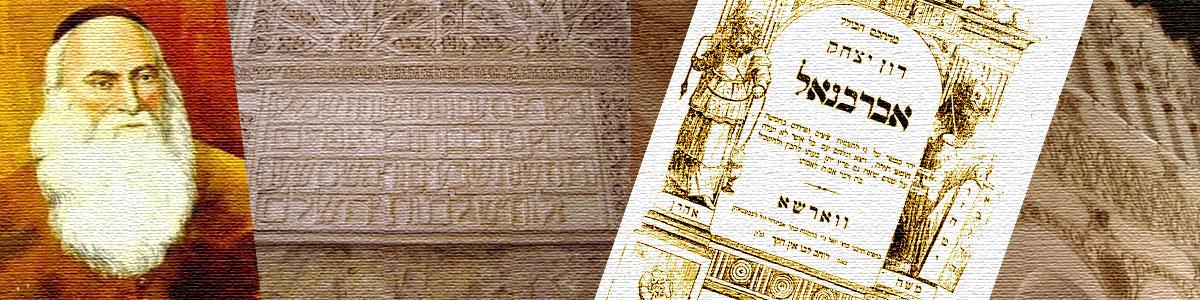
Abravanel’s World of Torah
is an enticingly innovative yet thoroughly loyal rendition of a major fifteenth-century Hebrew classic.
For the first time, Don Yitzchak Abravanel’s Bible commentary has become accessible IN ENGLISH.
Abravanel’s World of Torah: Series
The Book of Samuel
-
Samuel 1: Hannah
“Now there was a certain man of Ramathaim-zophim… and his name was
Elkanah… And he had two wives. The name of the one was Hannah, and the
name of the other Peninnah; and Peninnah had children, but Hannah had no
children.”Hannah rates as a pivotal figure in the Book of Samuel, leaving a lasting mark on Jewish liturgy
and history. Abravanel gives us a close reading of the chapter’s beginning verses. In so doing,
we better grasp not only Elkanah’s family’s dynamics, but also learn about God’s providence
vis-à-vis Hannah.Elkanah had two homes, as is implied with the word: “Ramathaim”, a plural form of the singular
“Ramat” or heights. Hannah lived on one “Ramat”, Peninah the other. Likely, Abravanel says,
the two hilltops neighbored each other, both heights visible one to the other. Further, he adds,
Elkanah’s main residence was with Hannah, this despite that she was childless: “And Peninnah
had children, but Hannah had no children.”But was Hannah barren, reproductively impaired, Abravanel probes? No. Had Hannah been
barren, a verse would have written so explicitly, as it had with the matriarch Sarah (Genesis 11).
Abravanel advances that Hannah’s reproductive system was fine. God prevented her from
conceiving and giving birth.The Creator intervened and hindered Hannah from having children, as implied “But Hannah had
no children.”More evidence appears later in this chapter when Elkanah and his wives ascended
to the Tabernacle. There, Elkanah “…gave a double portion; for he loved Hannah, but the LORD
had shut up her womb.” Abravanel derives his opinion using elementary logic. It is, Hannah’s
womb was open, intact, and thus capable of conceiving children, however God stepped in and
“shut up her womb.”Of course, this begs a question: why did the Maker impinge upon Hannah’s natural ability and
tamper with her physiognomy? Here is the answer. Heaven’s plan called for Hannah’s fervent
prayer to lift her out of the imposed impasse. The result was that God desired Samuel’s
conception and birth to be otherworldly, a miraculous happening. -
Samuel 10: Samuel and Saul
“When you are departed from me today, then you shall find two men…and they
shall say unto you: The asses which you seek are found… Then you shall go on
forward…and there you shall meet three men going to God to Beth-el, one
carrying three kids, and another carrying three loaves of bread, and another
carrying a bottle of wine.”Earlier, we discussed the prophet Samuel’s anointing of Saul – henceforth King Saul. What followed the
‘coronation’ reads quite bizarre. The prophet provided three signs or omens that Saul would encounter
on his way back home to his father’s house. In this essay’s lead verses, we quoted from two of the
prophet’s three signs to Saul: Messengers who apprise Saul about the lost donkeys and another meeting
– one with three men ascending to God in Beth-el. Here is the third sign. It foretells of a rendezvous with
a cadre of prophets: “After that you shall come to the hill of God, where is the garrison of the
Philistines…that you shall meet a band of prophets…”Abravanel’s imagination piqued, he asks: What is the meaning ensconced within these three signs that
seem more, excuse the crude comparison, like a page out of Alice’s Adventures in Wonderland than a
page out of the Bible. What is Samuel driving at? Or better, what instruction is the sagely seer signaling
to Saul, as he embarks on an unexpected course of Biblical proportion?Thankfully, Abravanel plumbs the depths of the three-framed montage, aiding Bible students to make
sense of the seeming disjointed jumble. We present Samuel’s life lessons to Saul in shorthand. The three
scenes were, in fact, anything but vacuous. So, what lay behind the prophet’s design? In a word, Saul will
need to adapt to his newly-acquired destiny. In order for him to succeed, he would need to adopt critical
traits. Let’s explain.Samuel taught Saul that his life has three stages or passages, each one distinct, each loftier and more
sublime than the next. One related to Saul’s father’s household. A second, more intricate role, relates to
Saul as the leader over his co-religionists. Finally, the third aspect, the highest and most noble, prods
Saul to seek truth, a contemplative process vis-à-vis tightening his relationship with the One Above.The first two domains (a member of his father’s household and national ruler) relate to nature. Socially
speaking, Saul hears that he, heretofore, played a mundane role as a son. After anointment, emphasis
shifts from neighborhood to center stage. The nation’s eyes turn to Saul, examining a man whose
conduct should be exemplary, worthy of emulation. Lastly, the prophet spurs Saul to pursue things
beyond the here-and-now, looking to otherworldliness.In brief, here's how Abravanel distills Samuel’s words and demonstrates natural and existential layers
tucked within each upcoming and unraveling scene. Moreover, the king hears what is now expected
from him.“The asses which you seek are found” matches up with Saul’s identity as a family member. “You shall go
on forward”goads the young monarch to step out beyond his most basic, biological role as dutiful son.
His days caring for his father’s livestock belong to yesterday.“Three men going up to God to Beth-el”suggests political and military command. More details of that
second experience are pregnant with meaning. The three men carried “three kids…three loaves of
bread, and another carrying a bottle of wine.” Saul was schooled in sobriety, sensibility. “And they will
salute you, and give you two cakes of bread, which you shall receive of their hand.” In so many words,
Samuel warned his ward: “Don’t partake of meat.” That is because a king needs to refrain from
aggressive behavior toward the masses. Stay clear of predatory behavior, unbecoming conduct that is
observable and associated with consuming animal flesh (and gluttonous kings), Samuel exhorted.
Indeed, sensitive leaders must not treat their “inferiors” as a meal ticket, footing the bill for mindless
excesses. Instead, let him be compassionate and of plain tastes. As for wine, Samuel taught Saul that
imbibing intoxicating drink is inappropriate, not to mention injudicious. Rather, let a king accept “two
cakes of bread.” Fair-minded and spartan subsistence befits a Hebrew king. Prodigal princes are the
people’s plague. On the other hand, bread is the staff of life, essential sustenance.Finally, Abravanel turns to the third encounter awaiting Saul on his way back home: “you shall meet a
band of prophets.”This experience is meant to shed light on what should be Saul’s cynosure –
fashioning a relationship with the Almighty. “After that you shall come to the hill of God…” Saul’s path,
should he heed the prophet’s counsel, will lead him (and the Hebrews) to a goodly place, a godly place.Samuel encourages his protégé, as he lays out a roadmap for a life of leadership and religious conviction.
The prophet concludes with a blessing: “And the spirit of the LORD will come mightily upon you…and
shall be turned into another man. And let it be, when these signs are come unto you, that you do as your
hand shall find; for God is with you.”In this way, Abravanel deciphers our chapter’s bewildering messages. Here are words imparted from
mentor to disciple, words to guide Saul as he sets out on a journey of a lifetime. -
Samuel 15: Kings Saul and David
“For rebellion is as the sin of witchcraft, and stubbornness is as idolatry and
teraphim. Because you have rejected the word of the LORD, He has also rejected
you from being king.”After King Saul committed his second sin, God pronounced His verdict to the prophet: “He has also
rejected you from being king.”For the king, there would be no other chance to regain God’s good
graces. Not for lack of trying. “And Saul said unto Samuel: I have sinned; for I have transgressed the
commandment of the LORD, and your words; because I feared the people, and hearkened to their
voice.” The contrite king meant every word. Saul begged God and Samuel for a reprieve. “Now
therefore, I pray you, pardon my sin, and return with me, that I may worship the LORD.” To no avail.Abravanel contrasts Kings Saul and David, specifically the treatment they received by the Maker after
both men sinned. He asks: Why did the Creator come down so hard on King Saul? It is true that Saul
transgressed God’s word when he spared King Agag. Equally true is that Saul sinned when he spared
Amalek’s beefy livestock. However, Abravanel contends, there was more to the man and more to the
story. Saul’s military exploits and daring can hardly be overstated. Without a whit of hyperbole, he
fought selflessly on behalf of the people and the country.How different was God’s treatment of King David after his egregious sins, as we will read later in Samuel.
For now, we refer to David’s role in the death of the Hebrew warrior, Uriah. That compounded David’s
affair with Bat Sheba, the wife of Uriah. Despite David’s deeds, Heaven did not pronounce him unfit for
office.This topic of contrasting Saul and David, not surprisingly, captured the imagination of many Biblical
commentators. Let us share Abravanel’s response to the chief differences between the two men’s
respective wrongs, as well as the different punishments meted out by God. But first to Abravanel’s
query: Did the Creator takes sides? Did He shower favor upon one king but not the other? Certainly not.
Based on three main observations of one medieval rabbi, we shall see why, albeit in shorthand.- Saul failed in the high office entrusted to him, as king. David did not.
- Saul, unquestioningly expressed remorse for his dereliction of duty. David’s contrition, Heaven
attests, had been of a more profound and sincere nature. - Saul’s wrongdoings put him at odds with divine commandments which devolved upon him and
only him. David’s felonies did not flout divine commands pertaining directly and particularly to
him. Instead, David’s lapses, as heinous as they were, had been of a general nature and
constituted infringements of Biblical commandments that bound each and every Hebrew.
Abravanel builds on these three bullet points above brought by an earlier scholar, adding a fourth
rationale to explain why God came down harder on Saul than David. In sum, it comes down to a sharp
contrast between both kings’ respective religiosity or piety. Let’s explain.The Maker did not accept Saul’s overtures and contrition. Why? It is because his two flaws centered on
shortcomings of faith and love for God. To be sure, when it came to sizing up Saul’s social greatness, his
performance of man-based commandments excelled above the rest. Indeed, on that count, his record
was matchless, so devout was Saul in social skills and man-focused behavior. But let us say, notwithstanding its importance, high marks in societal more is not what defines the true greatness of a Jew. Rather, a Jew’s test of character and mettle, ultimately, get evaluated by his level of faith in God
and love for Him.Given this parameter of measuring a Jew’s success based on closeness or intimacy with his relationship
with God, David crushed it. Indeed, David strove and struggled at that which makes a Jew a Jew.
Tirelessly and continually, he toiled in order to instill within himself pure faith and belief. David’s love for
his Creator is apparent should anyone glance at David’s work: Psalms. Thus, when a broken King David
begged the Maker for compassion, He heeded the call. -
Samuel 17: David and Goliath
“And the Philistine said: I do taunt the armies of Israel this day….”
Goliath had a foul mouth. David heard more than enough of the Philistine chief’s loud irreverence for the Chosen People and their army. Day in and day out, Goliath railed and ranted. “And the Philistine drew near morning and evening, and presented himself forty days.”
Arriving at King Saul’s camp, David spoke to his older brothers conscripted into Saul’s army.
During the course of the conversation, David witnessed Goliath’s indignities. “And as he talked
with them, behold, there came up the champion, the Philistine of Gath, Goliath by name, out of
the ranks of the Philistines, and spoke according to the same words; and David heard them.”
The young shepherd observed his people cower before over-sized, coarse Goliath. “And all the
men of Israel, when they saw the man, fled from him, and were sore afraid.”But there was another buzz making the rounds in the base. David listened as the Hebrew
soldiers spoke of King Saul’s offer in return for standing up to Goliath and defeating him. It
amounted to a promise of riches as well as Saul’s daughter’s hand in marriage. Jesse’s youngest
son wanted a crack at the uncircumcised galoot. “And David said to Saul: Let no man's heart fail
within him; your servant will go and fight with this Philistine.”King Saul, to put it mildly, was less than enthusiastic about David’s offer. Saul explained that the
notion that David fight Goliath rated ludicrous, highlighting the men’s disparities. Leagues
apart. “And Saul said to David: You are not able to go against this Philistine to fight with him; for
you are but a youth, and he a man of war from his youth.” In time, the shepherd earned the
king’s approval, even his blessing. Our essay takes Bible students through David’s methodical
argument, as explained by Abravanel.We’ll illustrate David’s presentation alongside the chapter’s verses. Bear in mind, we are
essentially discussing David’s rebuttal to Saul’s initial reaction that the shepherd was no match
for Goliath given their vastly lopsided battle-readiness and therefore commanded David to
stand down.Since David believed that he was the superior fighter, in comparison to Goliath, a prefatory
question that Abravanel brings up is one of definition: How do we determine who makes a
better soldier? What are the parameters behind this evaluation? And by extension, how might
we judge the superiority of contending armies? Sheer numbers or quantity play a role. Which
side has more warriors? Quality, too, counts in predicting which army holds the edge. Of
course, morale comes into play.We move from Abravanel’s preface about warfare in a general sense to an overview of David’s military background, as David saw it and hoped to convince Saul of the same. David gained military experience in the field, while pasturing Jesse’s flock.
- Frequently, and for starters, David fought off fierce, lone predators, like lions or a bears. “And David said unto Saul: Your servant kept his father's sheep; and when there came a lion, or a bear…”
- David earned a higher rank, per se, when he managed multi-front animal attacks, say, a lion and bear coming after Jesse’s sheep simultaneously. “Your servant smote both the lion and the bear.” At this juncture, note, Saul heard about David handling not only fierce enemies (lions and bears), but also performed well when outnumbered (coordinated lion/bear attacks).
- David introduced a third element to his fighting repertoire: Hot pursuit. That is, after a predator’s surprise attack, and after it carried off one of the flock, David excelled in tracking. “And when there came a lion, or a bear, and took a lamb out of the flock, I went out after him…”
- Advancing, David’s tactics became more sophisticated. He carried out delicate search and rescue missions. These included not only tracking predators that made off with sheep, but more. Namely, David killed the fierce attackers and extricated the sheep from the jaws of predators. “I went out after him, and smote him, and delivered it out of his mouth.”
- David needed stamina through it all, because sometimes even when he wounded the animal, that animal charged David to retrieve “stolen” prey. “And when he arose against me, I caught him by his beard, and smote him, and slew him.”
David was approaching his final remarks to Saul. He informed the king how these experiences inured him to pain, and honed fighting skills. Furthermore, these were not one-offs. David regularly faced grisly opponents, as per the verse: “Your servant smote both the lion and the bear…” The Hebrew phrasing, Abravanel teaches, suggests repetition.
The shepherd pleaded with the king. David neutralized ferocious animals and mastered the art of warfare. He begged Saul to reconsider; he wanted a shot (pun intended) at Goliath. “And this uncircumcised Philistine shall be as one of them, seeing he has taunted the armies of the living God.”
King Saul, however, didn’t budge. Permission not granted, Saul stated. And so, David changed tack, Abravanel continues. David brought God into the conversation. “And David said: The LORD that delivered me out of the paw of the lion, and out of the paw of the bear, He will deliver me out of the hand of this Philistine.” Now David was talking Saul’s language. “And Saul said unto David: Go, and the LORD shall be with you.”
In sum, Bible students see how Abravanel’s tight reading of the text makes things clearer. We trace how David built his case and successfully deflected King Saul’s initial hesitation and mischaracterization of David’s war readiness. The stage set, a contest for the ages was about to commence.
-
Samuel 18: Saul vs. David
“And it came to pass, when he had made an end of speaking unto Saul, that the soul of Jonathan was knit with the soul of David, and Jonathan loved him as his own soul.”
While King Saul increasingly feared and abhorred David, Saul’s son couldn’t have felt more differently toward David. Jonathan held David in deep esteem, a connection that led to an indelible bond/covenant between them. “The soul of Jonathan was knit with the soul of David.”And Jonathan wasn’t the only one impressed by David. So were the king’s servants. “And David went out; whithersoever Saul sent him, he had good success; and Saul set him over the men of war; and it was good in the sight of all the people, and also in the sight of Saul's servants.”Abravanel points out an anomaly. Generally speaking, rivalry and jealousy mar a relationship between people who engage in the same profession or trade. So, while Saul’s staff should have resented Jesse’s son, seeing him as competition and unwelcomed intruder on their turf, they didn’t.
Abravanel elaborates on Jonathan’s admiration for David, sharing insights regarding different types of love people feel. To illustrate, sometimes youths become close friends. This type is, well, sophomoric, superficial. Other times, men form friendships in hopes of gaining something in return for camaraderie, say, hopes of climbing a corporate ladder and the like.
Not so was Jonathan’s love for David; it was altruistic. “Then Jonathan made a covenant with David, because he loved him as his own soul.” What does it mean, Abravanel asks? There are two possibilities. One, Jonathan recognized something chiseled and noble about David’s essence, a powerhouse cut from a different cloth. Or maybe Jonathan felt a kinship with David, caring for David no differently than he cared for himself.
Jonathan understood that David, not he, was destined for kingship. “And Jonathan stripped himself of the robe that was upon him, and gave it to David, and his apparel, even to his sword, and to his bow, and to his girdle.”For Abravanel, Jonathan’s noblesse oblige served as an omen. In time, David would succeed King Saul and Jonathan sensed it intuitively.
As stated above, even King Saul’s top brass greatly respected David, as a gifted commander. Jonathan and Saul’s staff weren’t David’s only admirers. Ladies, too, took notice of David’s exploits, especially in defeating Goliath and the Philistines. Songs of praise and catchy tunes made the rounds – literally. “And the women sang one to another in their play, and said: Saul has slain his thousands, and David his ten thousands.” Predictably enough, all the attention lavished upon David vexed one man to no end. “And Saul was very wroth, and this saying displeased him; and he said: They have ascribed unto David ten thousands, and to me they have ascribed but thousands; and all he lacks is the kingdom!”
Getting second billing to David was just too much for the king to handle. From that moment forward, David would be public enemy number one and the bane of the king’s existence. “And Saul eyed David from that day and forward.”The shepherd from Bethlehem, for Saul, became a marked man.
-
Samuel 19: David’s Survival
“Now David fled, and escaped, and came to Samuel to Ramah, and told him all that Saul had done to him. And he and Samuel went and dwelt in Naioth.”
Samuel 19 is a continuation of an ongoing theme. We’re speaking about King Saul’s obsession with David – and his repeated attempts on his life. David’s survival bears testimony to God’s providence. Otherwise, any one of Saul’s numerous efforts to snuff out Jesse’s son would have done the job.
Abravanel neatly enumerates King Saul’s efforts to put an end to David.
- Twice, the king hurled his spear at David. Unaware, he dodged Saul’s lance. In those instances, David had no knowledge of the attempts, as he had unrelated reasons to move out of harm’s way in a nick of time – twice. “And Saul cast the spear; for he said: I will smite David even to the wall. And David stepped aside out of his presence twice.” Samuel 18.
- Saul laid out terms of agreement if David were to marry Michal. Specifically, in exchange for bringing 100 foreskins of the Philistines, Saul would let David marry Michal. The pretext, so Saul ascribes, was to avenge Philistine acts of wrongdoing. “And Saul said: Thus shall you say to David: The king desires not any dowry, but a hundred foreskins of the Philistines, to be avenged of the king's enemies. For Saul thought to make David fall by the hand of the Philistines.” Samuel 18. David fulfilled Saul’s terms, plus more. He delivered two hundred foreskins to the palace.
- King Saul enlisted others to do the dastardly deed. “And Saul spoke to Jonathan his son, and to all his servants, that they should slay David; but Jonathan Saul's son delighted much in David.”Recognizing David’s greatness and noble bearing, and believing that David would succeed Saul, Jonathan cut a covenant with David. Needless to say, neither Saul’s son or lieutenants complied.
- As discussed in the earlier essay, King Saul used his daughter Michal to snuff out David’s life. To no avail, as the king’s daughter would lend no hand or conspire in the bloody plot. “And Saul sent messengers unto David's house, to watch him, and to slay him in the morning; and Michal David's wife told him, saying: If you save not your life tonight, tomorrow you shall be slain.”
- David fled to Samuel in order to apprise the prophet of Saul’s ongoing attempts to slay him. David sought to secure Samuel’s support. “Now David fled, and escaped, and came to Samuel to Ramah, and told him all that Saul had done to him. And he and Samuel went and dwelt in Naioth.”
King Saul’s fifth attempt to kill David, like all earlier ones, failed. Indeed, providence protected His anointed one. Our chapter concludes with the king’s fifth assassination bid. Let’s discuss Abravanel’s interpretation of the events.
In actuality, a proper understanding of our chapter’s conclusion turns on a single key verb, oft repeated: prophesy. “And Saul sent messengers to take David; and when they saw the company of the prophets prophesying, and Samuel standing as head over them, the spirit of God came upon the messengers of Saul, and they also prophesied.” What does the verb mean, Abravanel probes? Had Saul’s messengers really joined the ranks of bone fide prophets, simply by entering Naioth?
Each of Saul’s successive sets of hit agents hit the same snag. “And when it was told Saul, he sent other messengers, and they also prophesied. And Saul sent messengers again a third time, and they also prophesied.”When all else failed, Saul personally pursued David and Samuel in Naioth, with, not surprisingly, the same outcome: Saul prophesied. “And he went thither to Naioth in Ramah; and the spirit of God came upon him also, and he went on, and prophesied, until he came to Naioth in Ramah.”
To rephrase the original question: had Saul’s messengers and Saul himself risen to the very highest of human endeavors and ranks, reaching the status of a prophet? Had they all heard God’s word, Abravanel wonders? The chapter closes with a particularly perplexing verse – and graphic image of King Saul. “And he also stripped off his clothes, and he also prophesied before Samuel, and lay down naked all that day and all that night. Wherefore they say: Is Saul also among the prophets?” Fairly, Bible students ask: Why did the king strip? After all, he certainly wasn’t an ecdysiast – Heaven forfend!
The venue, Naioth, was a place where truth seekers gathered and reflected, in hopes of meriting prophecy. Hardly had Saul’s messengers arrived there than they began conversing with the prophets. All the king’s men heard the same thing; David would succeed Saul as the Hebrews’ king. Hence, any attempt to assassinate David would come to naught, for the Maker had thusly decreed.
Not only were the seers sharing God’s word with Saul’s agents, but even Samuel, their master, reiterated: “And Samuel standing as head over them…” For Abravanel, it means that the hoary prophet foretold of David’s kingship.
Let’s turn now to Saul’s agents and to Saul, respectively. What did the agents experience in Naioth? Abravanel learns that the verb that we have translated as “prophesied” needs finesse. It doesn’t exactly mean that they somehow skipped stages to reach the pinnacle of man’s religious aspirations. Instead, it means they had entered an initiation phase. They secluded themselves; cogitated; quieted their thoughts to envision David’s destiny. Through clairvoyancy, they absorbed the prophets’ message. As a result, they refused to lay a finger on David, seeing that he was Heaven’s king-select. Saul’s agents also called it quits, resenting their mission, and disdained Saul on account of it.
As for Saul, a slightly different case than his messengers emerged. When he learned of his men’s desertion to join David’s side, he went to Naioth. “And he also prophesied before Samuel…”Again, for Abravanel, it teaches that Saul engaged in solitude for purposes of channeling the future. When the king saw Samuel, he grew awestruck, impassioned. Stirred, Saul shorn and shed his raiment. Naked and absorbed in meditation, the king remained that way – for a day and night.
Heaven’s communiqué overwhelmed King Saul. It felled him and sent him sprawling. Indeed, the experience hit a raw nerve. For a brief moment, Saul prophesied no differently than other veteran seers in Naioth. Rapture took hold of Saul as he cast off all sensory perception.
In this manner, Abravanel describes what happened to Saul and his messengers. David, however, had not prophesied. But he did smell an opportunity and fled town.
-
Samuel 21: David Comes to Nob
Following King Saul’s announcement for David’s arrest and execution, David and Saul’s son Jonathan renewed their pact. They then parted ways. (Samuel 20) Jonathan walked home; David ran for his life to Nob.
“And he arose and departed; and Jonathan went into the city. Then came David to Nob to Ahimelech the priest; and Ahimelech came to meet David trembling, and said unto him: Why are you alone, and no man with you?'”
Samuel 21 records this first leg of David’s wanderings from home and homeland. His first stop? “Then came David to Nob.” Priests served in the sacred spot, where the holy ark graced the Tabernacle. Nob cultivated a conduit to the Creator and David was needful of prayer. This chapter records what happened in Nob.
David met Ahimelech, Nob’s high priest. Shock greeted David. “Ahimelech came to meet David trembling.” The visit by King Saul’s top soldier, a national hero, had been unannounced and unexpected. What business could Saul’s celebrated commander possibly have in Nob, the priest shuddered to think?
Things grew stranger. A famished David begged Ahimelech for food. To complicate matters, consider this. Nob’s foodstuffs had been earmarked exclusively for priests (and their families). Furthermore, Tabernacle priestly officials strictly observed laws of spiritual purity. David, of course, had not been born to the priestly clan; he hailed from Judah. Abravanel’s comments will smooth the way for Bible students; however, for brevity, those comments will not be discussed here. Instead, here we’ll focus on another peculiar exchange between David and Ahimelech, as seen through Abravanel’s eyes.
After procuring something to eat, David asked Ahimelech for a personal weapon. “And David said unto Ahimelech: And is there peradventure here under your hand spear or sword? for I have neither brought my sword nor my weapons with me, because the king's business required haste.”
Positively puzzling! Saul’s storied soldier came unarmed. “And the priest said: The sword of Goliath the Philistine, whom you slew in the vale of Elah, behold, it is here wrapped in a cloth behind the ephod; if you will take that, take it; for there is no other save that here. And David said: There is none like that; give it me.”
Had Ahimelech hesitated to part with Goliath’s sword, that same one with which David decapitated Goliath? According to Abravanel, Goliath’s sword had been placed in Nob, for good safekeeping. No man, save for David, would be able to claim it. After all, David took it as a trophy and national relic. Thus, the sword was David’s to repossess, should he desire, but nobody else lay a claim to it. Moreover, Goliath’s sword had been the very weapon by which David’s heroism had been publicly proven, not to mention the weapon that brought respite to the embattled Hebrews by the Philistines.
David delighted to be reunited with Goliath’s sword. “And David said: There is none like that; give it to me.” Possibly, Ahimelech paused to hand over the sword to David. Why? Maybe it suggested something ominous, since Goliath – the sword’s erstwhile proprietor – had fallen by it. “And the priest said: The sword of Goliath the Philistine, whom you slew…”
Ahimelech sounded a note of caution, if not alarm. David, however, waived it off. Ahimelech would not pursue the point. Thus, if David felt no squeamishness concerning the sword, then Ahimelech wouldn’t either. “And David said: There is none like that; give it to me.” David’s confidence stemmed from the fact that Goliath’s sword, at the end of the day, curried divine assistance. David believed that the same would hold true whenever he wielded it, courtesy of heaven’s providence. The sword would be his trusted instrument with which to fight – and triumph.
David would find out soon enough if his good feeling about the sword was justified. After Nob, his next destination was Gath, a major Philistine stronghold. “And David arose, and fled that day for fear of Saul, and went to Achish the king of Gath.”
-
Samuel 25; Abigail Schools David
In the previous essay, we discussed David’s encounter with Nabal. See here
When David’s men returned empty handed, and when they debriefed him, David resolved to right the wrong. Nabal would pay dearly for his foul mouth and tightfistedness. “And David said unto his men: Gird you on every man his sword…” At the eleventh hour, however, Nabal got a reprieve, thanks to Abigail, his attractive and resourceful wife..
Abravanel discusses this prescient meeting between David and Abigail. In effect, she sought to educate David, who felt among other emotions, frustrated for having protected Nabal’s shepherds from sheep rustlers and other bad apples. First, we examine the pertinent verses. “Now David had said: Surely in vain have I kept all that this fellow has in the wilderness, so that nothing was missed of all that pertained unto him; and he has returned me evil for good.” David then vowed to wipe out Nabal: “God do so unto the enemies of David, and more also, if I leave of all that pertain to him by the morning light so much as one male.”
Abigail heard about her husband’s irreverence and tongue lashing given to David and his men. She smelled trouble and came up with a plan to stave off certain disaster for her husband and his farm. “Then Abigail made haste, and took two hundred loaves, and two bottles of wine, and five sheep ready dressed, and five measures of parched corn, and a hundred clusters of raisins, and two hundred cakes of figs, and laid them on asses.” Quickly Abigail set out, accompanied by escorts who bore the gifts. David, at this juncture, didn’t know that Abigail sought to redress her husband’s ill conduct.
Here is our essay’s main point. Abigail understood that revenge is a delicate matter, justifiable if any one of three circumstances present themselves. She apprises David of those three conditions and shows how none apply to David and Nabal’s encounter, as unfortunate as it was.
- Did Nabal cross the line, in terms of a Torah prohibition that called for capital punishment? Had Nabal deliberately disobeyed David’s express will? Had Nabal’s words been seditious to stir David to fulfill God’s command and execute Nabal?
- Revenge may be apt against an enemy if a man’s honor and reputation are at stake. By not taking revenge, moreover, outsiders may think that the aggressor has gained the upper hand and that the victim lacked strength to ward off offenders. Similarly, by the victim not standing his ground, it may goad a perpetrator to attack again. To forestall this, taking the initiative is paramount.
- Let’s suppose that David and his men lacked basic foodstuffs and suffered from malnutrition. As a result, David wanted to storm Nabal’s farm and raid it for victuals. That’s also legitimate.
These are Abigail’s three points. Had any one or more of those circumstances been extant, revenge would be fitting. Abravanel analyzes Abigail’s words to bolster her argument.
Had the Torah been breached? No. “Now therefore, my lord, as the LORD lives, and as your soul lives, seeing the LORD has withholden you from blood guiltiness, and from finding redress for yourself with your own hand…” For Abravanel, Abigail, means that God prevents David from exacting revenge – not she. The Maker stays David hand insofar as the Torah doesn’t demand Nabal’s death.
Next, if David would not have killed Nabal, would anyone draw a conclusion that David lacked the wherewithal to defend himself? Was Nabal even mildly interested in a protracted fight with David, that warranted him to kill Nabal? Noagain, as Abigail says: “now therefore let your enemies, and them that seek evil to my lord, be as Nabal.” She meant that David and Nabal were a mismatch. Fighting for one’s honor and glory befits a man who battles mighty warriors. However, Nabal was but a squeaky weasel. A mouse more than a man. And there’s no glory in battling a wimp. Still, continued Abigail, if David was itching for an honorable foe, then he should pursue King Saul or Commander Abner. Even Doeg, a chief officer to Saul, is fair game. But Nabal, said Abigail, is a nothing and killing him will prove nothing. The churl is a campesino, a crude one at that. Since Nabal presents no threat to David, disposing of him will not advance David’s name or reputation.
Finally, did David and his men lack for food? Not after Abigail arrived with her care package. “And now this present which your servant has brought unto my lord, let it be given unto the young men that follow my lord.”
In sum, Abravanel conveys Biblical values, per Abigail’s crafted argument before David. Revenge, as stated, has its place, its rules. David accepted Abigail’s compelling reasoning. Nabal would not die at his hands.
-
Samuel 25: The Immortal Soul
In the Bible, precious little is written explicitly about a truly far-reaching matter: man’s immortal soul. How puzzling! Fortunately, here in Samuel 25, Abravanel steps into the breach. Using words spoken by Abigail to David as the backdrop, he injects a hefty dose of clarity into this intriguing topic.
For our purposes here, we briefly encapsulate Abravanel’s seven findings or as he calls them: cores. We will show how Abigail’s terse comment and blessing to David lay a cornerstone into our understanding of the soul. Following are her prescient words: “Yet the soul of my lord shall be bound in the bundle of life with the LORD your God…”
- The wholly rational or intellectual soul or spirit does not shed its subparts. Furthermore, the soul stands apart from all other things that have been created. While other creations decompose, not so with the soul; it lives on. Alluding to this core #1, the wise Abigail said: “Yet the soul of my lord shall be bound in the bundle of life.”Man’s spirit waxes eternal.
- After death, man’s soul carves out its own niche, meaning that it doesn’t seek out or need to connect to or fraternize with other people’s souls. This attests to man’s custom-made spiritual reward/punishment based strictly his deeds (or misdeeds). To the point, a righteous soul is placed or positioned in its own precision-guided otherworldly setting. The pious, then, garner afterlife. Each tzaddik – accordingly. Core #2 is conveyed by Abigail, this God-fearing woman when she uttered: “Yet the soul of my lord shall be bound in the bundle of life.”
- Judgement or evaluation of man’s soul has nothing to do with his I.Q., grading a genius more advantageously. Instead, the sole measuring stick by which a soul is judged has to do with man’s adherence to holy commandments and behaving in a noble fashion. All told, God marks man’s soul according to his devotion to learning Torah and observance of Torah commandments on the one hand, and on the other hand, by keeping negative precepts at bay. Warning David about the consequences of killing Nabal, Abigail foreshadowed eternity should David heed her counsel: “Yet the soul of my lord shall be bound in the bundle of life…”
- From where is man’s holy soul created, chiseled? Put differently, from where did man’s timeless soul emanate, before being infused within man’s body? Is it the handiwork of the Almighty? Or, does it come from a lower, albeit divine spirit? Abravanel argues with and debates earlier thinkers and philosophers. The soul, he asserts, comes directly from the One Above. In our context of divine reward/punishment for man’s soul, Abravanel puts forth that it is the Creator’s domain; He doesn’t delegate to lower beings, though holy they may be. One Scriptural source suffices: “And the dust returns to the earth as it was, and the spirit returns unto God Who gave it.” (Ecclesiastes 12). Simply put, since God Himself forged man’s eternal soul, it follows that back to God will the soul return after it sheds its physical casing. Of course, we are speaking about the souls or spirit of pious men, the tzaddikim. Their spiritual lot receives, if you will, V.I.P. treatment, nestled close to the Almighty’s throne, metaphorically speaking. This is precisely what Abigail alludes to: “Yet the soul of my lord shall be bound in the bundle of life with the LORD your God.” Underscore: the soul of the pious clings to the Creator – and no other – after death. Divine providence.
- This core aspect of man’s soul addresses the question: What is the nature of reward after death? What pleasure will be derived by a tzaddik’s soul when his body expires? Now unchained by its former body, the soul attains spiritual closeness with the Maker. The pleasure is nary indescribable and inestimable, so idyllic is its new reality. One element of spiritual enjoyment centers upon new vistas which open up – a heretofore unfathomable understanding of God. A radiant light. Regarding this core, Abravanel conveys how the soul basks in otherworldly delight as per the tzaddik’s love of God and service to Him. In the afterlife, the unshackled soul sings the Creator’s praise. Abigail, a woman of valor, hints at a soul’s blissful reward: “Yet the soul of my lord shall be bound in the bundle of life with the LORD your God.”
- Here we change tack and address the fate of the soul of the wicked. What transpires to it after he dies? Will his soul wither and evaporate, no differently than his tainted body frame? For Abravanel, the answer is: NO. Instead, the evildoer’s soul, like the soul of the pious, lives on forever. However, that works to the louse’s disadvantage, as he will be subjected to divine consequence for a considerable time. It incurs divine wrath for the man having misused or abused his once-pristine spirit. This core, too, may be deduced from divinely inspired Abigail when she told David: “Yet the soul of my lord shall be bound in the bundle of life with the LORD your God; and the souls of your enemies, them shall He sling out, as from the hollow of a sling.”
- What is the nature or type of spiritual punishment dished out to a sinner’s soul? Abravanel contends that the consequence shall be of long duration and painful, discomfort unlike any physical distress. Jewish tradition writes on this topic. For our purposes here, we once again see how Abigail’s utterance produced pearls of wisdom, as she stressed to David the dire punishment awaiting the evildoer: “And the souls of your enemies, them shall He sling out, as from the hollow of a sling.”
In sum, we have outlined Abravanel’s insights into man’s soul.
-
The Book of Samuel 26: King David and Abner
The Book of Samuel 26 speaks of yet another golden opportunity heaven sent to David to scalp Saul. Not only did David, a man on the run, refrain from removing a constant existential threat, but he did more: he rebuffed Abishai, his aide-de-camp from delivering the coup de grâce. Abishai pleaded: “Now therefore let me smite him, I pray you, with the spear to the earth at one stroke, and I will not smite him the second time.”David explains his rationale to Abishai: “And David said to Abishai: Destroy him not; for who can put forth his hand against the LORD'S anointed, and be guiltless?"
David did, however, take full advantage of God’s miracle, as we read: “So David took the spear and the cruse of water from Saul's head; and they got them away, and no man saw it, nor knew it, neither did any awake; for they were all asleep; because a deep sleep from the LORD was fallen upon them.”
After slipping out of Saul’s camp, and after walking a safe distance, David called aloud to the slumbering men: “Then David went over to the other side, and stood on the top of the mountain afar off; a great space being between them. And David cried to the people, and to Abner the son of Ner, saying: Answer you not, Abner? Then Abner answered and said: Who are you that cries to the king?”
David identified himself to Abner, Saul’s chief of staff, before excoriating him. “And David said to Abner: Are not you a valiant man? and who is like to you in Israel? wherefore then have you not kept watch over your lord the king? For there came one of the people in to destroy the king your lord.” David not only castigated Abner; he pronounced dire punishment for dereliction of duty: “This thing is not good that you have done. As the LORD lives, you deserve to die, because you have not kept watch over your lord, the LORD'S anointed. And now, see, where the king's spear is, and the cruse of water that was at his head.” Clearly it was “not good”, but was it punishable by death?
Abravanel asks: Was David’s indictment of Abner courtroom antics and show? Did David truly believe failure to professionally guard Saul constituted a capital crime? Abravanel unpacks this section. When David described Abner as “a valiant man and who is like you in Israel”,he meant to raise the commander’s bar of culpability. That is, precisely because of Abner’s prominence, so too was his negligence that much worse.
Abravanel shares insights from his own day (15th century western Europe). He teaches that guard duty for a king demands around-the-clock surveillance. Thus, when the king traveled, his retinue took meticulous care to protect him. Especially at night, shifts were organized. Of course, the main thing centers upon keeping enemies at bay.
Indeed, David had every right to call out Abner, seeing that he served as Saul’s senior soldier. Abner, Abravanel says, was not required to personally stand guard over the king. However, he should have made sure that guards knew their job, and performed it. Blame, deservedly, had been attributed both to Abner and to the snoozing watchmen.
In sum, David’s words to Abner were: “This thing is not good.” But for the sentinels, David charged: “As the LORD lives, you deserve to die” is written in the plural, conveying that the subjects were the guards. Alternatively, both the chief of staff and the troops were liable for the death penalty – Abner for carelessly placing Saul’s life at risk and the watchmen for sleeping on guard duty. Still and all, are Abner and his men worthy of death? Yes, writes Abravanel. An extrajudicial execution would serve as a chilling effect for others. They would learn that shoddy soldiering will not be tolerated. Infringing military law by recklessly exposing a king’s life carries a steep price.
-
Abravanel's Introduction to the Book of Samuel Part 2
“Now there was a certain man of Ramathaim-zophim, of the hill-country of
Ephraim, and his name was Elkanah, the son of Jeroham, the son of Elihu, the
son of Tohu, the son of Zuph, an Ephraimite. And he had two wives. The name of
the one was Hannah…”Here, we present a second point Abravanel makes in his prefatory comments to the Book of
Samuel. The subject of David, as stated above, takes center stage. The Book of Chronicles, too,
tracks the life and times of David (plus much more). Here’s the rub. Samuel and Chronicles
portray disparate pictures of David. Why do Samuel the prophet and Ezra the scribe relate such
different facets of one man? Put differently, what are both authors – Samuel and Ezra – aiming
at?We find that Samuel omits details concerning David, while Ezra includes them. Moreover,
Samuel is mum regarding David’s considerable role in laying the foundation for the yet-to-be-
built Holy Temple. Other significant deeds are edited out of Samuel’s book as well.By the same token, even a cursory glance at Chronicles reveals Ezra’s repeating of what Samuel
already covered concerning David. What do readers gain from the redundancy? And, as a
historical record of Biblical events goes, much is missing. Even Ezra’s treatment of David
appears patchy, with nary a word about David serving admirably under King Saul, David’s
anointment by Samuel, or his slaying of Goliath etc. This brings Abravanel to a major premise:
Samuel’s and Ezra’s accounts cannot be random.Abravanel breaks new ground, focusing on Samuel’s and Ezra’s different reasons for having
written the Book of Samuel and Chronicles, respectively. Here is Abravanel’s takeaway. The
prophet sought to highlight four main aspects of David’s life. Simply sharing certain factoids or
providing material for posterity didn’t interest Samuel. For him, the main thing was conveying
knowledge crucial to promoting fear of God. Under this rubric of fostering a proper relationship
with the Maker, four categories may be discerned.- Showing David’s wholeness or completeness
- Spotlighting David’s transgressions
- Sharing God’s miracles and kindnesses showered upon David
- Stating Heaven’s punishment to David for wrongdoing
In his running commentary on Samuel, Abravanel explores in greater detail all of these four
topics. Any aspect of David’s life or career that does not fall neatly within one of those four
categories holds scant interest for Samuel. Before moving on to Ezra’s goals behind his different
account of David in Chronicles, Abravanel throws us a teaser. He will argue convincingly, going
to great lengths to resolve a puzzling – and misunderstood – issue: Why didn’t the Creator
choose David to build His Holy Temple in Jerusalem? Why did that sacred task devolve upon
Solomon, David’s son? More about that in a separate essay.Abravanel answers his questions regarding the sharp stylistic disparities of Samuel and Ezra,
and thereby, leads Bible students to glean one more titillating bit of information in his
introduction to Samuel: The prophetic process. The process, we learn, starts with painstaking
research. Thus, prophets applied themselves to intensely study all available information written
about any given historical period. We refer to those writings of the judges or kings (via scribes),
or perhaps the journals of a generation’s righteous individuals. Let us call these primary
research sources. God would then appear to these studious men or women of pious bearing,
imbuing them with a heavenly spirit, divine insight, and mission. God would next communicate
with these individuals, bidding them to take paper and pen, per se. Inspired from Above, they
would compose complete and authentic accounts of the subject at hand. An editorial or
refinement process followed, with some subjects stretched, some shortened. God oversaw this
multifaceted process. In the final analysis, Abravanel sums up, all of the prophets (Samuel
included) worked this way. Given: The end goal had two things to accomplish: To impart
reliable knowledge as well as foster fear of the Maker.Ezra the scribe’s aim in writing Chronicles differed greatly from Samuel’s (and the other
prophets). For one thing, God hadn’t granted prophecy to Ezra. The great scribe sought to
portray David in the typical fashion of historians/biographers. Thus, he listed all of King David’s
efforts and successes. -
Abravanel’s Introduction to the Book of Samuel
“Now there was a certain man of Ramathaim-zophim, of the hill-country of
Ephraim, and his name was Elkana, the son of Jeroham, the son of Elihu, the
son of Tohu, the son of Zuph, an Ephraimite. And he had two wives. The name of
the one was Hannah, and the name of the other Peninnah…”Abravanel’s introduction to the Book of Samuel is thought-provoking, covering important
topics. Here we share one of his key insights into a subject little discussed and perhaps less
appreciated: Why is this book named after Samuel the prophet? Abravanel elaborates,
interjecting classic dialectic method.To begin with, he writes, this much is certain. The Book of Samuel does not get its name owing
to the fact that Samuel authored his book. The reason we reject this notion is simple: We don’t
find that books of the Bible are called after their authors. To the point, Samuel wrote the Book
of Judges and Jeremiah penned the Book of Kings. Those two books do not bear their respective
authors’ names.Here are two of Abravanel’s answers. The name focuses on and testifies to Samuel’s
unquestionable imprint on the events recorded therein. That is, Samuel’s presence throughout
the work is palpable insofar as he acted as powerbroker and anointer of Saul and David. In that
sense, then, Samuel deserves to be accredited. Both men gained national prominence on
account of having been promoted by Samuel. Abravanel likens Samuel’s role and influence in
this book to a father and a son. Aren’t a son’s accomplishments or achievements a function of
dad having fathered the boy?Now we move on to Abravanel’s second rationale to explain the name of the Book of Samuel.
Actually, Abravanel touched on this reason in his introduction to Joshua. There he writes that
strictly speaking, Eli the High Priest and Samuel the prophet, insofar as they both judged the
nation, should have been written about in the Book of Judges. In the same vein, Kings Saul and
David should have shunted over to the Book of Kings.But precisely because of Samuel’s ennobled character and lasting stamp on Jewish history, it
was deemed only fair that this prophet and kingmaker would get top billing, in his own book.
So, from the perspective of that intellectual and ethical giant, the Book of Samuel begins his
story with Eli, the judge who immediately preceded Samuel.Likewise, David who was second in stature only to Samuel, rates as the next most central and
consequential figure in the Book of Samuel. Paralleling what we wrote about Eli above, the
reason why Saul’s story is recorded here has to do with providing a backdrop for King David. In
sum, as a tribute to Samuel, one of most remarkable and pivotal prophets in the Bible, and as a
tribute to King David, arguably the most remarkable and pivotal of all the Jewish kings, the Book
of Samuel was canonized in the Bible.Adding another dimension to this essay, Abravanel ties it together. The Book of Samuel
connects the earlier Book of Judges with the upcoming Book of Kings. Samuel and David,
indeed, are the two towering transitional figures; they are the quintessential prototypes –
bridging the historical epochs between the Hebrew judges and monarchs.Given the greatness of both men, why isn’t Samuel called the Book of Samuel and David? The
saintly ancient sages provide guidance, asserting that only one of the two would be duly
honored. They offer two rationales for Samuel bearing his – and not David’s – name.The first reason why Samuel edges out David has to do with his uniquely, chiseled soul. His
conception came about as a result of a sacred vow and intense prayer. Not so with David’s
birth. The second reason highlights Samuel’s own toil, piety, and selflessness. He was a
Nazarite. Moreover, he served and officiated in the Holy Temple. From a tender age, the
Shechinah’s haunt was his home. Contrast that coddled upbringing to David’s. He worked the
land before God called him out from the sheepfold. -
Samuel 1: Elkanah and Samuel
“And now there was a certain man of Ramathaim-zophim, of the hill-country of
Ephraim, and his name was Elkanah, the son of Jeroham, the son of Elihu, the
son of Tohu, the son of Zuph, an Ephraimite. And he had two wives. The name of
the one was Hannah, and the name of the other Peninnah; and Peninnah had
children, but Hannah had no children.”The Book of Samuel, Abravanel notes, begins with the word “And.” What do we learn from this
conjunction, he asks? This is more than a petty or picayune point of grammar; it teaches much.
Let us dive into it.Conjunctions such as ‘and’ convey a connection to that which preceded the current subject.
That is, the Book of Samuel needs to be seen as a link to the conclusion of the Book of Judges.
Recall, the final chapters in Judges recorded a most egregious crime (s), the gang rape and
murder of the concubine from Gibeah. She had been married to a Levite, hailing from “the hill
country of Ephraim.”What, then, is the nexus between that Levite and Elkanah? Furthermore,
what is the significance of the connection?Judges concluded with a national calamity, really, a scourge. Forefront were a Levite and his
concubine whose storyline takes place in the backdrop of “the hill country of Ephraim” a place
associated with disgrace. The Book of Samuel is the Book of Judge’s antidote. “And now there
was a certain man of…the hill country of Ephraim, and his name was Elkanah…” Elkanah and
Hannah gave birth to Samuel, a boy who will become a sterling personality of, well, Biblical
proportions. Hence, Elkanah, a pious Levite (as we will show), restored the prestige of the
Levites, a tribe whose reputation had been battered and tarnished due to a series of lapses
detailed in the closing chapters of Judges. Furthermore, the “hill country of Ephraim”, too,
regains its splendor owing to Elkanah and his family. Accursed and stigmatized, the territory of
Ephraim no longer is, for God blesses it.Abravanel learns more about Elkanah’s lineage, information gleaned from the Book of
Chronicles. Elkanah belonged to the tribe of Levi. Because of that tribal bearing, Hannah
enlisted her son Samuel to work in Shiloh’s Tabernacle until his dying day. Of course, not all
Levites gave themselves over to lifetime employment in the Tabernacle. Most resided in Israel’s
forty-two Levitical cities (not counting the six cities of refuge).Abravanel cites commentators who shed more light on Elkanah and Samuel’s illustrious
forebears, as intimated by our lead verse: “And now there was a certain man of Ramathaim-
zophim…” In Hebrew, both words (Ramathaim” and ‘zophim”) literally mean lofty, exalted, and
visionaries. These writers understand that both father and son descended from prominent men
of renown, renown for having merited prophecy. All of Elkanah and Samuel’s forbears feared
God and sought truth. Their Hebrew names illustrate as much.Who was Samuel, Abravanel sums up? Here was a man who had descended from a profoundly
religious family, men who garnered intimacy with the Creator, awarded with prophecy. Samuel,
we will see, earned the same, gaining entrée to his Maker’s inner-sanctum. -
Samuel 1: Hophni and Phineas, Eli the Priest’s Sons
“And this man went up out of his city from year to year to worship and to
sacrifice unto the LORD of hosts in Shiloh. And the two sons of Eli, Hophni and
Phinehas, were there priests unto the LORD.”Much can be learned about Elkanah’s character, suggests Abravanel, by paying close attention to our
chapter’s narrative. Annually, Elkanah left home, wives and children in tow, and paid a visit to the
Tabernacle. Likely, the occasion had been the thrice-annual obligation to offer sacrifices in the
Tabernacle. “And it came to pass upon a day, when Elkanah sacrificed, that he gave to Peninnah his wife,
and to all her sons and her daughters, portions.”According to the letter of the law, Abravanel learns, only men are obligated to make a holiday pilgrim to
the Tabernacle or Holy Temple. Why, he asks, did Elkanah bring along his two wives, children and other
members of his household? Tellingly, Elkanah sought to instill within his family members a deep sense of
religious faith and belief. Regular visits to Heaven’s earthly haunt encouraged these all-important traits.Something else is going on as well. Simply put, a man’s happiness is not complete in the absence of his
wife’s and children’s presence and company. When, however, a man’s family joins him in sacrificing to
the One Above, there is complete contentment and satisfaction.“And the two sons of Eli, Hophni and Phineas, were there priests unto the LORD.” In the next chapter,
much will be devoted to Eli’s two sons’ impiety. In a word, Hophni and Phineas abused their high
position at the Tabernacle in Shiloh. Horribly so. Besides forcibly snatching sacrificial meat, they also
forced themselves upon female pilgrims.In such a tainted and corrupt environment, one would, perhaps justifiably so, recoil and stop visiting the
Tabernacle. Boycott. To the contrary, Elkanah didn’t flinch, as he “went up out of his city from year to
year to worship and to sacrifice unto the LORD of hosts in Shiloh.”He paid, Abravanel teaches, little
attention to Hophni and Phineas’ untoward conduct, unconscionable as it was. For Elkanah, only one
thing mattered – focusing single-mindedly on his and his family’s service to God. -
Samuel 10: Hebrew Kingmaker
“And Samuel called the people together unto the LORD to Mizpah.”
The conclusion of Samuel 10 reads anti-climactically, sort of. Those verses pertain to the coronation of
King Saul in Mizpah, attended by the entire nation. Abravanel explains that the venue, Mizpah, held
centuries-long, religious importance as a holy haunt. Some five hundred years earlier, Joshua had
erected an altar there. From that time forward, Jews regularly frequented Mizpah, where they would
pour out their hearts to the Maker. A magnet, Mizpah attracted Hebrews. It evoked the very best in
people, helping them achieve closeness with God.Let’s move on to the main point here in this essay: the selection of King Saul to serve as the first Hebrew
monarch. In Mizpah, the prophet assembled the people. “And he said unto the Children of Israel.” At
this juncture, Samuel lambasted the Jews. Though they experienced miracle after miracle wrought by
the Creator in Egypt and beyond, still they clamored for a monarchy. Thus, a lottery began. “Now
therefore present yourselves before the LORD by your tribes, and by your thousands.”High drama ensued. “So Samuel brought all the tribes of Israel near, and the tribe of Benjamin was
taken. And he brought the tribe of Benjamin near – by their families. And the family of the Matrites was
taken; and Saul the son of Kish was taken.”Abravanel questions Samuel’s motives for having convened the people. Hadn’t God already commanded
Samuel of His choice? Hadn’t the prophet already anointed Saul? Even more fundamentally, Abravanel
asks, why had God been the Kingmaker (via Samuel) in the first place? Was that the Creator’s domain?
Far better, Abravanel boldly entertains, had the nomination and nod come from among the ranks, from
the people themselves. After all, it had been their initiative – and not the Maker’s – to establish a
monarchy. Finally, the world over, it is the people who elect their leaders, a choice based on merit.- God took the prerogative to Himself because He feared tribal bickering. Each tribe would put
forth a man from his tribe and the matter had potential for igniting ugly, internecine
factionalism. Or worse, perhaps in an absence of consensus two or more kings would reign. - Men are gullible. And choosing Mr. Right is tricky business. If the Maker had not directed Samuel
to anoint Saul, owing to his sterling character, a charlatan may have looked the right part and
won the popular vote. Man sees superficialities. He votes for whom he believes to be
upstanding, although in actuality the churl is a cad. God, in contrast, sees what’s in a man’s
heart and thus can be depended upon to pick the right man for the highest job in the land. - Had the people voted on a king, perforce, he would be beholden to them. A favor here. A job
there. In short, the king’s dispensations would all but assure a national disaster, a corrupt cadre
of boors and bums. Torah values assure the proper running of society, not policies based on
returning favors to avarice, manipulative, and disingenuous kingmakers.
Really, our discussion here should be viewed as a complement and/or supplement to a verse found in
Deuteronomy 17: “You shall in any wise set him king over you, whom the LORD your God shall choose,
one from among your brethren shall you set a king over you. You may not put a foreigner over you, who
is not your brother.”God, naturally, via His prophet, had settled the matter of kingship to the people’s satisfaction. “And
Samuel said to all the people: See you him whom the LORD has chosen, that there is none like him
among all the people? And all the people shouted, and said: Long live the king.” In this way, Abravanel
peeks into Samuel’s head to answer the questions posed above, allowing Bible students to gain clarity as
to God’s, the Kingmaker’s rationales, in His vital role in establishing the Jewish regent. - God took the prerogative to Himself because He feared tribal bickering. Each tribe would put
-
Samuel 11: Consensus and Kings
“Then Nahash the Ammonite came up, and encamped against Jabesh-gilead.
And all the men of Yabesh said unto Nahash: Make a covenant with us, and we
shall serve you.”We wrote in the previous essay that the people of Israel were satisfied with God’s choice of
King Saul. That was not a misstatement – in the main. Owing to King Saul’s physique and noble
bearing, he had gathered a respectable following. But not all of the Hebrews acknowledged, let
alone paid homage to the king. Loose-lipped, bellyachers expressed ill-will, as we find at the
end of Samuel 10: “But certain base fellows said: How shall this man save us? And they
despised him…”Between the yeas and nays, a sort of stalemate ensued. So did the pre-
coronation status quo. Thus, after a public ceremony in Mizpah, Saul went home, where he
resumed farm chores.Not for very long. “Then Nahash the Ammonite came up, and encamped against Jabesh-gilead.”
Abravanel learns from Nahash’s name, snake in Hebrew, that this human serpent spelled
horror. A slithering sicko he was. Although the Jews of Jabesh hoisted the white flag and
offered to surrender to Nahash, they were rebuffed. “And Nahash the Ammonite said unto
them: On this condition will I make it with you, that all your right eyes be put out.” As for the
unctuous Nahash’s intent, it was plain to see. Blinding the Jews would create “a reproach upon
all Israel.”Enter King Saul. The people of Jabesh dispatched “messengers to Gibeath-shaul”, Abravanel
surmises, because they heard that Saul had been anointed king and dwelled there. Meanwhile,
back at the farm, as it were, the king-in-name-only toiled. “And, behold, Saul came following
the oxen out of the field. And Saul said: What ails the people that they weep? And they told him
the words of the men of Jabesh.”With God’s help, Saul rose to the occasion. “And the spirit of God came mightily upon Saul…”
With it, a wave of indignation washed over him, “and his anger was kindled greatly.” Our
chapter continues, detailing how the king swung into action. Tens of thousands of troops were
quickly mobilized. In short shrift, Saul’s soldiers smashed Nahash. They “smote the Ammonites
until the heat of the day. And it came to pass, that they that remained were scattered, so that
two of them were not left together.”Reeling and running from the route, Ammonites
skedaddled.Indeed, victory belonged to King Saul, courtesy of the One Above. The people knew that they
had a leader, so much so that the Jews demanded those base men who earlier pooh-poohed
Saul in Mizpah now pay for their sniggering and disloyalty. “And the people said unto Samuel:
Who is he that said: Shall Saul reign over us? bring the men, that we may put them to death.”
Magnanimously, the king pardoned the wrongdoers.The chapter winds down, recounting what happened après guerre. “Then said Samuel to the
people: Come and let us go to Gilgal, and renew the kingdom there.”In fact, this penultimate
verse and the chapter’s concluding one, for Abravanel, speak volumes. They impart a lesson for
the ages: the need to pursue and forge a socio/political consensus. “And all the people went to
Gilgal; and there they made Saul king before the LORD in Gilgal; and there they sacrificed
sacrifices of peace-offerings before the LORD; and there Saul and all the men of Israel rejoiced
greatly.”In sum, we read how Saul had first been privately installed by Samuel the prophet. That had
been followed by a public proclamation in Mizpah, via divine lottery. Yet, the thing hardly
elicited a positive change within the body politic. What was missing, Abravanel asks? He
answers, that the selection of a king, even when said selection comes from Above, does not
suffice. National will holds the key ingredient to political harmony. -
Samuel 12: Bible Demands Accountability – Not Immunity
“And Samuel said unto all Israel: Behold, I have hearkened unto your voice in all
that you said unto me, and have made a king over you.”Seemingly, Samuel 12 states the obvious when Samuel tells his brethren: “I have hearkened
unto your voice…and have made a king over you.” For the last several chapters, we have been
reading about King Saul and monarchy. It’s hardly newsworthy. So, what is Samuel getting at
here, Abravanel wonders?Samuel then continues. “And now, behold, the king walks before you; and I am old and
grayheaded; and, behold, my sons are with you; and I have walked before you from my youth
unto this day.”The elder leader’s career is winding down, a judgeship spanning generations.
Now, however, his sun is setting. He wants to bare his soulActually, something else laid heavy on his mind. Samuel sought to settle a score – and accounts.
“Here I am; witness against me before the LORD, and before His anointed: whose ox have I
taken? or whose ass have I taken? or whom have I defrauded? or whom have I oppressed? or of
whose hand have I taken a ransom to blind mine eyes therewith? and I will restore it you.”.As Abravanel learns, the prophet’s farewell is no nicety, formality. Instead, the judge emeritus
of the Jewish people shared sagely advice: leaders are accountable for their actions; immunity
is immoral and ludicrous. Samuel bids people to speak out – without fear of reprisal.Abravanel explains that men in power take gifts/graft for themselves in three distinct ways – all
of which are unconscionable.- They might try to “innocuously” categorize it as a loan, not a present.
- They might steal or rob outright.
- They might sweet talk rich folks and finagle them into handing over moolah.
Be that as it may, Samuel on the eve of handing over the reins of power to King Saul, exudes
transparency. Let’s see how Abravanel matches up the three typical ways unscrupulous rulers
misappropriate money with Samuel’s final words to his co-religionists.“Whose ox have I taken….”The prophet demands to know from all those present if anybody
“lent” him an animal that now needs to be restored. Next, Samuel says: “Or whom did I
defraud?”This refers to exerting force or threat of force. Finally, the prophet addresses the
third method that leaders are wont to do for purposes of extracting gifts: “Or whom have I
oppressed?”Did I, Samuel challenges, ingratiate myself with wealthy people for personal
aggrandizement?The prophet wound up his words, assuring the crowd that he was prepared to repay any money
inappropriately gained. “Or of whose hand have I taken a ransom to blind mine eyes therewith?
and I will restore it you.”Abravanel puts Samuel’s remarks in light of political custom he witnessed in renaissance Italy –
political accountability. Namely, there was a practice extant in the Italian city-states that when
one magistrate or judge retired and a new man sat on the bench, protocol demanded a
thorough audit. To the point, the first order of business for any incoming leader was to review
his predecessor’s policies. If wrongdoing could be proved, the outgoing leader would be sued
and forced to pay damages. “And he said unto them: The LORD is witness against you, and His
anointed is witness this day, that you have not found aught in my hand. And they said: He is
witness.”Solemnly, Samuel invokes God and His anointed, King Saul, to acknowledge his
honesty and integrity. King Saul, the incoming ruler, would be charged to perform a painstaking
review of Samuel’s finances. -
Samuel 12b: Bible Poly Sci: 101
“Now therefore stand still and see this great thing, which the LORD will do
before your eyes. .”Samuel 12 winds up a punishing tirade against the Hebrews for demanding a king. Abravanel
explains Samuel’s diatribe, essentially the prophet’s philippic against that fraught form of
government as a singularly misguided, harebrained idea. A prophet ablaze.Tucked into Abravanel’s unabashed treatment of monarchies is a hidden gem. We only mention
in it passing, in order to focus on the subject at hand: Bible Poly Sci: 101. This gem is, in fact, a
cornerstone of Judaism. Of course, we speak about free choice. For Abravanel the question is
this: If the Hebrews’ petition to Samuel to anoint a king was bad and harmful, why did God
comply? And why was Samuel the prophet complicit, as it were, in identifying and proclaiming
Saul the king? The answer, as stated, forms a fundamental tenet of Jewish faith. God
underwrites free choice. Choice, as it implies, means free-volition to do good or evil. Enough on
this topic for now. Let’s move on to the subject at hand and see how Abravanel interprets
Samuel’s remarks, in light of the perils inherent in a Hebrew monarchy.What is “this great thing” Samuel announces? Before we answer, here is a short preface. In the
Holy Land, agriculture is a delicate matter. Summer rain wreaks havoc on crop production.
Now, here are the verses detailing the “great thing” that Samuel foretells. “Is it not wheat
harvest to-day? I will call unto the LORD, that He may send thunder and rain; and you shall
know and see that your wickedness is great, which you have done in the sight of the LORD, in
asking you a king.”God heard the prophet’s plea; He performed. “So Samuel called unto the LORD; and the LORD
sent thunder and rain that day; and all the people greatly feared the LORD and Samuel.” Dire
(and unseasonable) weather conditions spelled calamity. Here is how Abravanel breaks down
the people’s collective – and twofold – sins.On the one hand, the Hebrews wronged their Maker. “And all the people said unto Samuel:
Pray for your servants unto the LORD your God, that we die not; for we have added unto all our
sins this evil, to ask us a king.” Abravanel notes that the Jews conceded their folly and affront to
God. Repentance is evident. But something else emerges. Namely, “for we have added unto all
our sins this evil”suggests that nothing good will result from a Hebrew monarchy – only
heartache.While that generation may not see the horrid consequences of their foolhardy demand, the
Creator is forward seeing. “Which you have done in the sight of the LORD, in asking you for a
king.”A timebomb ticks. Before long, Hebrew kings will make life hell for Israelis. Summer
thunder and rain are frightful. Darkened heavens and deafening hubbub augur angst. Ominous
omens. Political disaster stalks.What was their second wrongdoing? The Hebrews bucked – and rejected – Samuel’s authority.
“And they said unto him: Behold, you are old, and your sons walk not in your ways; now make
us a king to judge us like all the nations.” (Samuel 8) As to the prophet’s rejoinder to the
ungainly call, he cooperated. “And Samuel said unto all Israel: Behold, I have hearkened unto
your voice in all that you said unto me, and have made a king over you.”(Samuel 12) He
grasped his brethren’s drift and knew that they ousted him.Samuel, Abravanel learns, held his fire and chastisement until he anointed King Saul. That is
because he didn’t want the people to misconstrue. They should not think that he sought to
thwart the people’s will. “And now, behold, the king walks before you…” The deed being a fait
accompli, Samuel bellowed.But first, he called for a commission to investigate all allegations made against his sons.
“Behold, my sons are with you…” No ‘proteksia’, Samuel insisted. Then the prophet pivoted to
the people’s rejection of his leadership. “And I have walked before you from my youth unto this
day.”He demanded his co-religionists to stop hemming and hawing. If they had a gripe, tell him
to his face.Ultimately, Samuel 12 strikes a conciliatory chord. Hearing the Hebrews’ contrition for having
wronged the Creator and prophet, Samuel moved on. He promised not to withhold goodwill
and prayer on behalf of his brethren. “Moreover, as for me, far be it from me that I should sin
against the LORD in ceasing to pray for you; but I will instruct you in the good and the right
way.” The people received more wise counsel from the aged prophet and judge. “Only fear the
LORD, and serve Him in truth with all your heart; for consider how great things He has done for
you. But if you shall still do wickedly, you shall be swept away, both you and your king.” -
Samuel 13: Bible as History
“Saul was ---- years old when he began to reign; and two years he reigned over
Israel.”How old was Saul when his reign began? Samuel 13 enigmatically answers with, well, a “blank”
or dash- dash-dash. Of course, an evasive response or a non-answer beggars the imagination.
Why isn’t the verse forthcoming, especially since it brought up the subject in the first place?
Indeed, beguiled Bible commentators expended enormous effort to uncover the “King Saul”
conundrum – his age and duration of kingship. In unraveling that knotty problem surrounding
Saul, Abravanel forges a Biblical timeline of events before, during, and beyond the first Hebrew
king. To be clear, we’re talking about a full accounting and chronology of the events recorded in
Joshua, Judges, Samuel, and Kings.At root, chronology in the Bible touches on a larger theme: Bible as history. How might we
approach the subject, meaning what assumptions shall we adopt? How will we untangle thorny
difficulties inherent in the endeavor? Consider a sampling of the gusty headwinds a historian
faces, as Abravanel writes.- In Joshua, how long did our eponymous protagonist (Joshua) judge his brethren?
- In Judges how do we calculate the years of any of the fourteen Hebrew judges, vis-à-vis
the greater context and background of the years when foreigners had subjugated the
nation? - Also, in Judges, the Bible does not peg any of the judges to a concrete historical marker.
That is, we don’t find that Othniel judged, say, 100 years after the Exodus or that
Samson judged 2900 years after the creation of the world etc.
Conspicuous omissions come to roost when a chronicler attempts to figure out these matters,
and so many more basics, like Samuel’s age when he passed away. Or to bring in Saul here in
Samuel 13, how will we synthesize data and distil biographical information about King Saul’s
age when he began to reign?For Abravanel, these issues are not picayune. To the contrary, getting to the bottom of Jewish
history rates as an imperative. As for Abravanel’s methodology, a start point is the inviolability
of the Jewish sages’ tradition. More of his assumptions will become evident as we delve into
the following three verses, culled from different books in the Bible.1) Our lead verse relays the duration of King Saul’s tenure. “And two years he reigned over
Israel.”2) A verse in Kings provides a reliable, workable baseline: “And it came to pass in the four
hundred and eightieth year after the Children of Israel were come out of the land of
Egypt, in the fourth year of Solomon's reign over Israel, in the month Ziv, which is the
second month, that he began to build the house of the LORD.”(I Kings 6)3) Lastly, Abravanel looks to Judges for guidance: “And Jephthah sent messengers unto the
king of the children of Ammon, saying: What have you to do with me, that you are come
unto me to fight against my land…While Israel dwelt in Heshbon and its towns, and in
Aroer and its towns, and in all the cities that are along by the side of the Arnon, three
hundred years. Wherefore did you not recover them within that time?”(Judges 11)Seeing how Abravanel addresses those three verses in Samuel, Kings, and Judges is key to
putting his timeline into focus. To begin, when our chapter writes that King Saul reigned for 2
years, that’s not to say that the first king’s rule was of short duration – two years. Instead, it
means that in the second year of his reign, the newly-minted king consolidated power.
Specifically, King Saul mustered the troops in establishing a national army. Well, then, how long
was his kingship? Abravanel puts forth it lasted seventeen years. He also believes that Saul was
about forty when Samuel anointed him.Next, Abravanel tackles the task of proving the accuracy of the verse in Kings: “And it came to
pass in the four hundred and eightieth year….”Naturally enough, in order to show how to
account for nearly five centuries of Jewish history, Abravanel must do a deep dive into the
books of Joshua, Judges, Samuel, and Kings. For brevity, we only share the outline of
Abravanel’s worksheet, per se.To begin with, he learns that Joshua (together with his colleagues) judged for twenty years. And
idyllic years they were. Successes in conquering the Holy Land led to divvying up the territory to
the twelve tribes. Six years subsequent to the apportionment of Israel, the Hebrews professed
and observed the commandments to a T, as per a verse: “And Israel served the LORD all the
days of Joshua…”(Joshua 24).After Joshua and the elders passed away, things got sticky. Religious observance fell dismally by
the wayside, periodically, throughout the years when the fourteen Hebrew judges led the
nation. We have written about this well-worn model in Judges. Suffice it to say here, that
Abravanel goes judge-by-judge and shows how long each one ruled. Noteworthy is this. The
tenures included not only the actual time that they judged. It also includes the “run-up” years
when foreigners ran roughshod over the land and its people.At that juncture in his discourse, Abravanel transitions from Judges to Samuel insofar as Eli and
Samuel are counted as the fifteenth and sixteenth judges respectively. Again, to keep this
chronicling/history moving swiftly, let us simply assert that we are after Samson (14 th judge) just
about three hundred sixty years post Exodus. We arrive at that figure when we consider Eli’s,
Samuel’s, King Saul’s, plus King David’s successive reigns (Eli 40 years, Samuel 20 years, Saul 17
years, and David 40 years, and year four of Solomon).Lastly, we conclude with the judgeship of Jephthah, a judge we read about midway in the book
of Judges. In his missive to the king of Ammon, the Hebrew judge asks the king why it took
three hundred years to lodge a complaint! Is three hundred years literal, he asks? In fact, it
isn’t. Jephthah “rounded up”, seeing that the actual number of years from Moses’ victory over
Ammon until the time of Jephthah was closer to two hundred seventy years.In this way, Abravanel spells out the math and demonstrates how Biblical history is calculated.
-
Samuel 13b: King Saul’s Rise and Fall…
"And Samuel said to Saul: You have done foolishly; you have not kept the
commandment of the LORD your God, which He commanded you. For now
would the LORD have established your kingdom upon Israel forever.“King Saul had hardly ascended to the throne when he lost it. His blunder features front and
center in Samuel 13, a failure that stripped him of the moral right to continue occupying the
land’s highest public office.What was his sin? Abravanel examines Saul’s misconduct and the circumstances surrounding it.
In assessing the king’s wrongdoing, Abravanel takes a close look at our lead verse. Was Saul’s
downfall associated with offering sacrifices in Gilgal, Abravanel considers? “And Saul said: Bring
hither to me the burnt-offering and the peace-offerings. And he offered the burnt-offering.”
Given that the Temple had yet to be built, Abravanel answers, there was no ban on offering
sacrifices in Gilgal. Hence, he acted reasonably.And if Saul’s crime had to do with the timing of the sacrifice, insofar as Samuel instructed Saul
to wait a week in Gilgal for him to arrive, that too, can be rebutted. “And he tarried seven days,
according to the set time that Samuel had appointed; but Samuel came not to Gilgal; and the
people were scattered from him.” A week had elapsed, and besides, the king was losing his
audience, if you will. Thus, we cannot find fault with timing. Abravanel revisits our verse. By so
doing, we better grasp the gravitas of the Saul’s royal misstep. Let’s delineate three aspects of
his sin.Misjudgment. By offering the sacrifices in Gilgal, King Saul usurped Samuel’s prerogative. God’s
will dictated that the prophet, solely, perform sacrificial services in Gilgal.Impetuosity. While it is true that King Saul waited seven days for Samuel’s arrival, that missed
the point. Instead of trusting in the Maker that the prophet would show up, Saul acted rashly.
So, even if Samuel tarried, Saul should have bided his time, knowing that the seer’s coming was
imminent. Emphasis lay with his arrival and not with the seven-day duration. Abravanel goes
further here. He states that King Saul offered the sacrifice early in the morning of day seven,
believing that was the optimal time to do so. The prophet, in fact, came to Gilgal later that day.Misplanning. King Saul mobilized troops, setting in motion his military strategy. The prophet,
however, wanted nothing of the sort. Nor did Samuel ask Saul to engage in war against the
Philistines. His instruction to Saul was explicit. “Seven days shall you tarry, till I come unto you,
and tell you what you shall do.”(Samuel 10) Granted that King Saul feared the Philistines, and
further unsettling was Saul’s witness of the wholescale desertion of his troops.
Notwithstanding, Saul needed to step back in order to see the whole picture. That would have
allowed him to realign and upgrade his relationship with the One Above. Faith was called for. In
addition, the king needed to be fully attuned to the prophet’s words. Flouting Samuel’s
command carried stiff consequence: death. The point is this. Despite King Saul’s good
intentions, intentions are not being judged; belief in God and acceptance of the prophet’s role
were.Self-initiative has its time and place, but this was neither. “And Samuel said to Saul: You have
done foolishly; you have not kept the commandment of the LORD your God, which He
commanded you.”Saul’s reliance on Samuel should have been implicit. After all, hadn’t Saul
heard and then witnessed Samuel’s earlier signs and omens play out? Why hadn’t the king
deferred to the prophet?Abravanel leaves little doubt. King Saul faltered and forfeited his kingship – for reasons stated.
There had been a toxic mix of misjudgment, impetuosity, and misplanning. This admixture,
then, precipitated the king’s fall. God intended to bring to bear a divine show of providence in
avenging the Philistines. Saul’s bungling spoiled things. Disobeying Samuel’s prophetic directive
would not be condoned. As a result, God had little use for Saul. The Maker moved on.Meanwhile, in Bethlehem, a young man tended his father’s flock….
Page 1 of 3