
-
Abravanel’s World of Torah
is an enticingly innovative yet thoroughly loyal rendition of a major fifteenth-century Hebrew classic.
For the first time, Don Yitzchak Abravanel’s Bible commentary has become accessible IN ENGLISH.
Abravanel’s World of Torah: Series
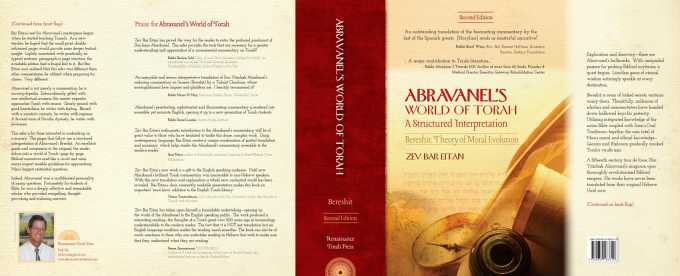
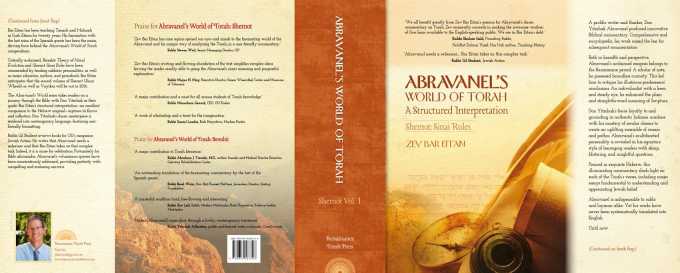
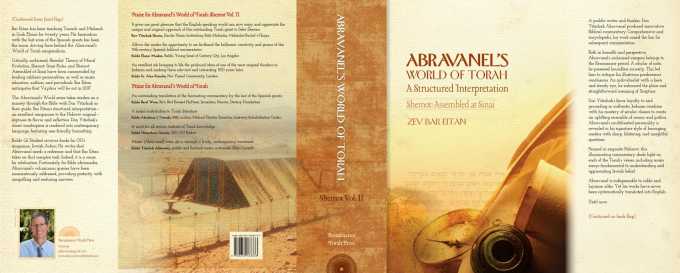
The Book of Samuel 2
-
The Book of Samuel 2:3 : King David’s Family Portrait
”And unto David were sons born in Hebron. And his firstborn was Amnon, of Ahinoam the Jezreelitess.”
This chapter chronicles King David’s growing family. In rapid succession, verse after verse introduces readers to David’s wives and sons. After reading about Amnon born to Ahinoam, we learn of a second son “Chileab, of Abigail the wife of Nabal the Carmelite, and the third, Absalom the son of Maacah the daughter of Talmai king of Geshur and the fourth, Adonijah the son of Haggith; and the fifth, Shephatiah the son of Abital; and the sixth, Ithream, of Eglah David's wife. These were born to David in Hebron.”
During the Hebron sojourn, indeed, King David’s family grew by leaps and bounds. Abravanel notes an anomaly concerning Abigail’s son Chileab. Namely, in the Book of Chronicles, this boy’s name is recorded as Daniel and not Chileab. (See I Chronicles 3.). Seemingly, the lad was given two names – for good reason. The name Daniel refers to God’s judgement, as the Hebrew word instructs. Specifically, David joyfully called the boy Daniel because the Maker took up David’s cause against Abigail’s louse of a husband, Nabal. Recall, the wealthy herdsman humiliated David in his time of need. On the run and falling on hard times, David ordered his men to ask Nabal for food.
Deaf ears. The rotten cheapskate unceremoniously tossed David’s men out of his house emptyhanded. Now, sometime later, David rejoiced in the Creator for having vindicated him. (See I Samuel 25.)Marking victory over no-good Nabal, David chose the name Daniel. The ancient rabbis explain the child’s second name – Chileab. Again, David acknowledges God’s favor shown to him. In Hebrew, the name Chileab conveys how the boy totally resembled David, his father. David saw in this the hand of God. Why? That generation’s scoffers put forward that Abigail had conceived with Nabal, before he died and after she wed David. When Abigail gave birth to her son, and everybody recognized that Chileab was a spitting image of his father (David), it effectively put the kibosh on baseless rumors.
Abravanel next turns to the question of “Eglah David’s wife.” Why, of all the other women, is she designated as King David’s spouse? Again, Hebrew is key. The word means calf, as in a young cow. Abravanel holds that the plain meaning behind tacking on Eglah’s spouse status is straightforward. Since, as stated, the Hebrew word might refer to a cow, our verse clarifies. Readers should not draw an incorrect conclusion. Eglah here refers to a woman – and not “Elsie” the cow.
-
The Book of Samuel 2:1 David Mourns Saul
The first Book of Samuel concluded with the Philistine’s slaughter of the Hebrews. The bloodbath claimed the lives of tens of thousands of Hebrews, notable among the casualties were King Saul and his three sons. Samuel II covers King Saul’s successor – King David’s illustrious career.
”And it came to pass after the death of Saul, when David was returned from the slaughter of the Amalekites, and David had abode two days in Ziklag.”
Tragic news reached David. “It came even to pass on the third day, that, behold, a man came out of the camp from Saul with his clothes rent, and earth upon his head; and so it was, when he came to David, that he fell to the earth, and prostrated himself. And David said unto him: From whence come you? And he said unto him: Out of the camp of Israel am I escaped.”
Debriefing followed. “And David said unto him: How went the matter? I pray you, tell me. And he answered: The people are fled from the battle, and many of the people also are fallen and dead; and Saul and Jonathan his son are dead also.” Public mourning and shrieks pierced the heavens. Then came an inquest. “And the young man that told him said: As I happened by chance upon mount Gilboa, behold, Saul leaned upon his spear; and, lo, the chariots and the horsemen pressed hard upon him.” The man told David that this information was not mere hearsay; he had been an eye witness. “And when he looked behind him, he saw me, and called unto me. And I answered: Here am I.”
David heard about Saul’s final moments, including Saul and the messenger’s interaction. “And he said unto me: Who are you? And I answered him: I am an Amalekite. And he said unto me: Stand, I pray you, beside me, and slay me, for the agony has taken hold of me; because my life is just yet in me.”To King Saul’s order, the man obeyed. “So I stood beside him, and slew him, because I was sure that he could not live after that he was fallen; and I took the crown that was upon his head, and the bracelet that was on his arm, and have brought them hither unto my lord.”
Thus, David learned of the circumstances surrounding Saul’s dying moments. “Then David took hold on his clothes, and rent them; and likewise all the men that were with him.” Indeed, David had much to mourn, for the Philistines had exacted a terrible toll. “And they wailed, and wept, and fasted until even, for Saul, and for Jonathan his son, and for the people of the LORD, and for the house of Israel; because they were fallen by the sword.”
David reprimanded the man. “David said unto the young man that told him: Whence are you? And he answered: I am the son of an Amalekite stranger. And David said unto him: How were you not afraid to put forth your hand to destroy the LORD'S anointed?”David passed judgement. “And David called one of the young men, and said: Go near, and fall upon him. And he smote him that he died.”
Abravanel explains our passage in the context of a judicial proceeding. Who killed King Saul? Was it self-inflicted or by the hand of another? Clearly, if the king took his own life, why would David execute the young man? Furthermore, even if we concede that the lad killed Saul, hadn’t he followed the king’s orders? And what of court protocol? David had no witnesses save for the messenger and Jewish law is explicit: the testimony of a man who perjures himself is inadmissible.
Here is Abravanel’s approach to our chapter’s military tribunal, King David presiding. Let’s suppose a man says to another fellow: “hit me.” Jewish law prohibits the fellow to follow through and hit. Moreover, the victim can claim damages from the attacker. This is in accordance with the Talmud. All the more so is this the case if a man asks someone to kill him. We compound matters by saying that the man who makes the request is a king. Certainly, the fellow who complies and kills the king shall be tried for murder. Rationale for said law boils down to a pithy truism: Words of the apprentice or words of the master – which prevail? The Talmud, of course, utilizes metaphor. Since the Torah prohibited compliance to hurt another, people may not ignore divine truth (master) in lieu of a mortal’s request (disciple).
Abravanel goes further. Due process requires testimony from witnesses. In our case here with the young man and King Saul, there were no witnesses. David had not followed the strict letter of Jewish law but instead relied on extralegal privileges accorded to a king. Note this. The messenger’s words were substantiated by din of him having brought Saul’s royal vestments to David. “And I took the crown that was upon his head, and the bracelet that was on his arm, and have brought them hither unto my lord.”
More rationale to explain David’s summary judgement follows. David believed the messenger as to the Amalekite lineage. Saul, we know from Samuel (1:15) wiped out the Amalekites. This young man may have motivated to kill Saul in order to avenge his nation. For all these reasons, we better understand David’s handling of the case. Plus, Abravanel adds, King David sought to instill fear into the Hebrews: No one should ever dare touch a hair of a king’s head.
-
The Book of Samuel 2:1 David’s Dirge: How are the Mighty Fallen!
”And David lamented with this lamentation over Saul and over Jonathan his son.”
The chapter ends with a dirge that David composed in the aftermath of the Hebrews’ dismal defeat at the hands of the Philistines. All tallied, the terse jeremiad runs for ten verses. The elegy’s refrain, thrice repeated, bewails: “How are the mighty fallen!”Abravanel analyzes David’s dirge. Why the obvious reiteration, he asks? Broadly, David’s refrain captures each of the battle’s three catastrophes.
- Hebrew rank-and-file warriors died on the field – How are the mighty fallen!
- Jonathan, bow in hand, slain – How are the mighty fallen!
- King Saul succumbed after a gallant last stand – How are the mighty fallen!
Context and background hold the key. David and his men had reason to tone down or even ignore Saul’s death. After all, they had been pursued by King Saul for some time. As a result, theirs became a life on the run, incessant scrambling and rummaging. Now that Saul, his sons, and troops lie dead, how should David’s fighters react?
David’s dirge addresses them, imploring his men to properly evaluate and internalize King Saul’s loss, one of monumental significance. David, on the one hand, drove home the sheer magnitude of Hebrew casualties. We speak of Saul’s disciplined forces who maintained their grit, shoulder to shoulder, without breaking formation. Standing their ground, they fought swarming hordes.
Next, David broaches the “touchier” subject of mourning Saul and his sons. Essentially, the men heard from David that they should put the cataclysmic loss in its proper context. They need not direct lamentation toward Saul or his sons. Instead, David brought the loss home, to them. The men must grasp the gravitas of the situation created by Saul’s defeat. That is, Israel’s overall reputation got mauled, immeasurably marred. Hebrew national honor took a hit. That, David stressed, meant they – David’s soldiers – suffered debasement and a loss of respect in the eyes of the Philistines and other adversaries.
Where is Abravanel’s textual support? “And David lamented with this lamentation over Saul and over Jonathan his son, and said – to teach the Sons of Judah the bow…” Popular translations have the Hebrew word kashet as “bow.” Yet, Abravanel learns, the Hebrew term affords another tack. It is “hardship.” Using that meaning, we reframe so that the verse reads: “to teach the Sons of Judah hardship.” David conveys a heavy message to his men: Saul’s loss’s repercussions affect them; they suffered a blow to their prestige and reputation.
The next phrase is: “Behold, it is written in the Book of Jashar.” This refers to the Five Books of Moses. In it, the prophet commanded his brethren to “love your neighbor.” Here, David schools his warriors in empathy. In our context we’re talking about mourning the fallen Hebrews, soldiers worthy of esteem.
“Your beauty, O Israel, upon your high places is slain! How are the mighty fallen!” How apt to bemoan and eulogize the victims, on two distinct planes. One is particular, the other collective. Let’s explain. Collectively, Hebrew fighters fell “upon your high places.”Geographic advantage hadn’t helped – high ground notwithstanding. As for the slain, David describes them: “Your beauty, O Israel.” Crème de le crème were Saul’s chosen soldiers.
Of course, David also had Saul and Jonathan in mind, both comely men of regal bearing. Here David focused on the particular when he adjured his soldiers to rue the father and son’s death – to join in the jeremiad: “How are the mighty fallen!”
-
The Book of Samuel 2:2 Snapshots of David
In the previous chapter, we read that David and his men mourned and chanted elegies to King Saul, his three sons, and the slain troops. The dirge (and chapter) concluded: “How are the mighty fallen, and the weapons of war perished!”
”And it came to pass after this, that David inquired of the LORD, saying: Shall I go up into any of the cities of Judah? And the LORD said unto him: Go up.”
Up until now, recall, David and his fighters had sought refuge in Philistine-controlled territory. However, now that Saul no longer threatened them, David wondered if the time was ripe to come home. And so, “David inquired of the LORD.” Abravanel shares insights into David’s personality – and his smarts.
For one thing, David did not make a move of major consequence without consulting God via the Urim and Thummim, a holy priestly ornament affixed to the high priest’s breastplate. This dependence on the Maker distinguished him from King Saul. Saul hadn’t relied on the Creator to the same degree as David. Ultimately, Abravanel writes, King Saul’s misplaced self-reliance and lack of reliance on the One Above would prove Saul’s undoing. In sum, King Daviid showed an adherence to God’s will and commandments in a way that King Saul had not. For Scriptural support, Abravanel cites the Book of Chronicles: “So Saul died for his transgression which he committed against the LORD, because of the word of the LORD, which he kept not; and also for that he asked counsel of a ghost, to inquire thereby, and inquired not of the LORD; therefore He slew him, and turned the kingdom unto David the son of Jesse.”(I Chronicles 10)
Explicitly, as stated, we read that David asked for God’s input to see if the time was auspicious to leave the Philistines and King Achish. Abravanel asserts that the timing of David’s query to the Urim and Thummim reveals much about his smarts. Namely, David asked prior to Achish’s return from the war with Saul and the Hebrews. What underlies David’s timing?
David reasoned that King Achish of Gath knew of King Saul’s death. Furthermore, Achish knew that David had been anointed king. Perhaps, David figured, Achish would put a warrant out for his arrest, thereby preventing him from ruling over the Hebrews. The Philistine king would not want to risk a formidable David fighting Achish in Gath, after having rebuilt the Hebrews’ fighting forces. Alternatively, Abravanel considers that Achish might have pressured David to solemnly swear to him to sign a peace pact. Such strongarm tactics, naturally, would have forever hamstrung King David’s ability to fully secure his brethren’s and Israel’s safety.
Thus, Abravanel illustrates that David inquired of the LORD well before King Achish’s arrival in Gath. And God flashed David a green light. “And the LORD said unto him: Go up.” By the time the Philistine king rode into town, David was long gone, starting life anew in Hebron. “So David went up thither, and his two wives also, Ahinoam the Jezreelitess, and Abigail the wife of Nabal the Carmelite. And his men that were with him did David bring up, every man with his household; and they dwelt in the cities of Hebron.”
Before concluding, Abravanel shares another snippet into David’s character. The Philistines, remember, had decapitated Saul, whisked away his body along with the bodies of Saul’s sons (I Samuel 31). Unsated, Philistines stooped lower. They affixed Saul’s and his son’s mangled, lifeless bodies to the city walls of Beth-shan (under Gentile control). Saul’s subjects risked their lives to retrieve Saul and his sons. David learned of the people’s valor during his coronation. “And the men of Judah came, and they there anointed David king over the house of Judah. And they told David, saying: The men of Jabesh-gilead were they that buried Saul. And David sent messengers unto the men of Jabesh-gilead, and said unto them: Blessed be you of the LORD, that you have shown this kindness unto your lord, even unto Saul, and have buried him. And now the LORD show kindness and truth unto you; and I also will requite you this kindness, because you have done this thing.” Textual juxtaposition reveals David’s probity. No sooner had he been installed as the king of Judah than he paused festivities to pay King Saul his final respects.
-
The Book of Samuel 2:3 Abner and Ish-bosheth
From up close, Abravanel, an advisor to kings, knew a thing or two about realpolitik. In the Book of Samuel 2:3 he explains the terse, acerbic dialogue here between King Ish-bosheth (Saul’s son and successor) and Israel’s military kingpin Abner in that light.
”And it came to pass while there was war between the house of Saul and the house of David, that Abner showed himself strong in the house of Saul.”
What was at the root of Ish-bosheth and Abner’s altercation? As the age-old expression goes – "cherchez la femme." In this case, the “woman” was in plain sight and easy to find since she resided in the palace. Rizpah had been King Saul’s concubine. Jewish tradition makes clear that a king’s wife, no differently than his concubine, may not marry after the king’s death.
Now here’s the bedchamber’s backstory and Abravanel’s thoughts on it. The Hebrew nation fought a civil war. The opposing forces comprised those loyal to David versus those loyal to the late King Saul, or the newly-coronated successor King Ish-bosheth. Abner was more than Saul’s chief of staff; he kept Saul’s kingdom afloat. Without him, gone would be the northern kingdom. That is because David’s forces continually grew in numbers and strength. Momentum was on David’s side.
Ish-bosheth, Abravanel contends, was fully aware of his dependence upon Abner, parenthetically King
Saul’s kin. A truly inexpendable personage. All this the King Ish-bosheth knew.Let’s continue with the narrative. “Now Saul had a concubine, whose name was Rizpah, the daughter of Aiah; and [Ish-bosheth] said to Abner: Wherefore have you gone in unto my father's concubine?” Abravanel sharply criticizes Ish-boshet, charging that calling out Abner’s actions were stupid. The king had no business admonishing Abner, considering his own precarious place in the palace. Without Abner, the northern kingdom was nothing but a house of cards. Far better, Abravanel advises, had King Ish-bosheth just shut up and ignore the whole stinking affair. But the king didn’t.
Abner let loose. “Then was Abner very wroth for the words of Ish-bosheth, and said: Am I a dog's head that belongs to Judah? This day do I show kindness unto the house of Saul your father, to his brethren, and to his friends, and have not delivered you into the hand of David, and yet you charge me this day with a fault concerning this woman.” Abner had a mouth. He also had a point. Actually, a couple of points. He was no run-of-the-mill dog-catcher. Rather, he was Ish-bosheth’s army’s driving force. Furthermore, Abner’s loyalty to Saul and the family were beyond reproach. As stated, he was Saul’s kin.
Abravanel observes that Scripture doesn’t explicitly write that the generalissimo was having intimate relations with Rizpah; however, given Abner’s belligerency, his royal riposte, it’s fair to assume that he and Rizpah were an item, to be colloquial.
All told, readers gain better insight into this passage from the viewpoint realpolitik, courtesy of Abravanel, a veteran court Jew to kings. Sometimes, Abravanel counsels, silence is golden
-
The Book of Samuel 2:3 Abner and Joab
In the previous essay, we covered the falling out between King Ish-bosheth and Abner. A strained
relationship snapped. Abner took unilateral measures to dismantle King Saul’s separate state. The de-
facto ruler had had enough of Ish-bosheth’s drama. Unbeknownst to the king, the kingdom’s kingpin
sent emissaries of peace to King David, in Hebron.”And Abner sent messengers to David straightaway, saying: Whose is the land? Saying also: Make your league with me, and, behold, my hand shall be with you, to bring over all Israel unto you.”
King David graciously accepted Abner’s equally magnanimous bid for national unification. Gone would be an imaginary dividing line between north and south. No longer would brother fight brother. But let’s remember, as this resurfaces in our chapter, that internecine war had exacted a heavy toll. Notably, Abner had killed Asahel (II Samuel 2). In the two men’s deadly contest, puerile and senseless as it was, Asahel fell. He was survived by two brothers, Joab and Abishai. All three men were Zeruiah’s sons. She and David were siblings, two of Jesse’s children.
Let us provide more background. After David and Abner agreed on unification, a feast ensued. “So Abner came to David to Hebron, and twenty men with him. And David made Abner and the men that were with him a feast.”Tellingly, Joab was not part of the love fest. He had been leading troops in a marauding expedition far from Hebron. When Joab returned from a foray, he learned of the détente. He saw red. Joab conjured up a plausible pretext to blow the compact into smithereens: Asahel’s death.
Abner, after the soiree, started to make his way home, when Joab caught up with him. He apprehended Abner and dragged him back to Hebron. What transpired next can only be described as utterly cowardly and detestable. “Joab took him aside into the midst of the gate to speak with him quietly, and smote him there in the groin, that he died, for the blood of Asahel his brother.”
News of the execution quickly spread. David heard. Scripture records the king’s reaction. “He said: I and my kingdom are guiltless before the LORD forever from the blood of Abner the son of Ner. And David said to Joab, and to all the people that were with him: Rend your clothes, and gird you with sackcloth, and wail before Abner.” A somber outpouring marked the funeral procession. “And King David followed the bier.” Bucking Jewish law banning kings from public grieving, a visibly shaken David trailed the casket.
Joined by Hebron’s townspeople, David cried and mourned sorely. However, he stopped short of punishing Joab, his nephew. Why the pass, Abravanel probes? Furthermore, he asks, why did Joab murder Abner? Abravanel uncovers the true, criminal motives. And avenging Asahel didn’t make the list.
Based on a close reading of our text, Abravanel gives three reasons to explain why Abner took down Asahel.
- Jealousy. Joab feared that a David-Abner friendship would push him out, making him, if you will,
the third wheel or odd man out. - Desperado. Joab fancied himself as a swashbuckler. His credo – live by the lancet.
- Chaos. Joab thrived on disorder, profiting by destabilization. Unification, Joab calculated, would
crimp his style and put him out of business. Spurning peace, he welcomed turmoil.
King David grasped Joab’s motives. Outraged, he cursed his nephew. “Let it fall upon the head of Joab, and upon all his father's house; and let there not fail from the house of Joab one that has an issue, or that is a leper, or that leans on a staff, or that falls by the sword, or that lacks bread.”
Abravanel matches David’s words with Joab’s demented machinations. If Joab sought to drive a wedge between David and Abner, God would render Joab’s descendants the outsiders: “Or that is a leper.” If Joab sought to live by the sword, the Creator would make a substitution. “Or that leans on a staff.” Exterminator Joab, sans sword, would need a cane – wobbling through life. Finally, if Joab hoped for lucre via racketeering, well, that dream would be dashed. His seed would lack basic sustenance: “Or that lacks bread.”
Given King David’s ire, a natural question arises: Why hadn’t David punished Joab and Abishai? Abravanel answers plainly. “And I am this day weak, and just anointed king; and these men the sons of Zeruiah are too hard for me.” King David vented his predicament. He simply had not consolidated his power base yet. It was, David put forth, as if he had just been freshly coronated. Zeruiah’s sons, however, were merciless. The king knew that Joab and Abishai were marked men. The Maker would see to it. At the right time, Joab and Abishai would pay dearly for their dastardly deed. “The LORD reward the evildoer according to his wickedness.”
- Jealousy. Joab feared that a David-Abner friendship would push him out, making him, if you will,
-
The Book of Samuel 2:4 King Saul’s Dynasty Eradicated
In Samuel 3, we read about Abner reaching out to David in order to bring about unification between the Hebrews’ warring factions: loyalists to Saul against loyalists to David. The path to unification, however, was not rose-lined. As our chapter conveys, court intrigue there was aplenty.
”And when Saul's son heard that Abner was dead in Hebron, his hands became feeble, and all the Israelites were affrighted.”
King Ishbosheth, Saul’s son and successor, learned of Abner’s assassination at the hands of Joab and Abishai, David’s sister’s sons. Ishbosheth’s “hands became feeble.” Abravanel notes that our lead verse omits Ishbosheth’s name, instead he’s identified as “Saul’s son.” This, of course, is telling. The designation cues readers how Ishbosheth had not even mildly measured up to his father.
“And all the Israelites were affrighted.” Those Jews loyal to King Saul and to Abner couldn’t agree about David’s role (or lack thereof) in the slaying of Abner in Hebron. One group believed that King David orchestrated the assassination. A competing mindset held David harmless, noting that the king deplored the murder. Hence, confusion and hysteria festered: “And all the Israelites were affrighted.”
Not all Israelites, though, were gripped by fear, paralyzed. Two men designed a dark deed in order to eviscerate Saul’s dynasty. “And Saul's son had two men that were captains of bands; the name of the one was Baanah, and the name of the other Rechab…” Ishbosheth’s officers plotted a cloak-and-dagger operation. “Rechab and Baanah, went, and came about the heat of the day to the house of Ishbosheth, as he took his rest at noon.” Incognito, “they came into the midst of the house, as though they would have fetched wheat; and they smote him in the groin; and Rechab and Baanah his brother escaped.”
More assassination details come to light. “Now when they came into the house, as he lay on his bed in his bed-chamber, they smote him, and slew him, and beheaded him, and took his head, and went by the way of the Arabah all night.”
In this barbaric way, Saul’s kingdom vanished. While in a technical sense, one descendant remained at large and could have, theoretically, ascended the throne, it wasn’t happening. “Now Jonathan, Saul's son, had a son that was lame of his feet. He was five years old when the tidings came of Saul and Jonathan out of Jezreel, and his nurse took him up, and fled; and it came to pass, as she made haste to flee, that he fell, and became lame. And his name was Mephibosheth.”
Let’s learn how Abravanel ties up the loose ends to this very short chapter. He begins with questions. Why hadn’t Rechab and Baanah killed Jonathan’s son, Mephibosheth, given that he was in line to royal succession? Why do the verses describing the assassination appear disjointed or even superfluous? Finally, what did Rechab and Baanah hope to accomplish by decapitating King Ishbosheth?
As stated above, Mephibosheth was not monarch material. In Biblical times, kings rode out ahead of the troops. Given Mephibosheth’s physical limitations, he simply couldn’t assume that vital role of national protector. At least, Abravanel notes, King Ishbosheth cut a dashing figure and had no bodily or physical disability. As for Mephibosheth, the killers Baanah and Rechab spared him, figuring he was not a contender for the throne. Abravanel emphasizes the two brothers’ evil streak. They sought to eradicate Saul’s dynasty, down to the last, viable descendant.
Next, Abravanel addresses our seemingly disjointed narrative which conveys two accounts of the assassination of King Ishbosheth. Two possibilities present themselves. One considers that the two sections complement and supplement each other. That is, the murderers disguised themselves to gain access or entrée to Ishbosheth. An additional verse, then, provides grisly details (decapitation). Alternatively, the two brothers first entered the palace and struck the king. They escaped. Second guessing themselves, Rechab and Baanah feared they had not “finished” the job. Hence, they circled back to make sure Ishbosheth had died.
Lastly, why had the assassins beheaded King Ishbosheth and then brought his head to David? Plainly, Baanah and Rechab had hoped to ingratiate themselves with King David. It turned out to be a misguided plan, for David harbored no ill-feeling toward Saul or his descendants. The mistake proved costly. “And David commanded his young men, and they slew them, and cut off their hands and their feet, and hanged them up beside the pool in Hebron.”
Our chapter concludes by recounting David’s act of kindness for Ishbosheth, his final respects. “But they took the head of Ishbosheth, and buried it in the grave of Abner in Hebron.”
-
The Book of Samuel 2:5 Jerusalem – City of David
We read in the last essay that David dealt harshly with Rechab and Baanah, murderous thugs who slayed King Ishbosheth, Saul’s son. Comeuppance came swiftly. Summarily, King David executed both assassins. Samuel 5 records David’s first official acts as the widely-supported ruler over all the Children of Israel.
”Then came all the tribes of Israel to David unto Hebron, and spoke, saying: Behold, we are your bone and your flesh.”
Naturally, the spiritual Hebrew king set his sights on Jerusalem. After all, it is the pride and joy of the Holy Land – its crown jewel. At that time, and while David still operated the kingdom from Hebron, a formidable occupying force stood in David’s way: the Jebusites. “And the king and his men went to Jerusalem against the Jebusites, the inhabitants of the land…”
Abravanel begins the chapter with two questions:
- Why was there a need to liberate Jerusalem? Hadn’t the tribes of Judah and Benjamin already subdued the Jebusites?
- How should we understand the Jebusites’ words to David after he and his soldiers reached Jerusalem. “The inhabitants of the land, who spoke unto David, saying: Except you take away the blind and the lame, you shall not come in hither; thinking: David cannot come in hither.” What is meant by the Jebusite puzzling allusion to “the blind and the lame” defenders? Moreover, how could a considerably compromised category of society stop a mighty monarch and his men?
In his commentary to the Book of Judges, Abravanel posits that Jerusalem and Jebusite land refers to a sizeable, contiguous territorial tract. Part of it was controlled by the tribe of Judah, after driving out one Jebusite resistance: “And the Children of Judah fought against Jerusalem, and took it, and smote it with the edge of the sword, and set the city on fire.” (Judges 1). Benjamin fared considerably worse. “And the Children of Benjamin did not drive out the Jebusites that inhabited Jerusalem; but the Jebusites dwelt with the Children of Benjamin in Jerusalem, unto this day.” (Ibid).
When King David ascended the throne, he confronted a reality of a partitioned Jerusalem/Jebusite
region. This clumsy and undesirable arrangement simply would not do. For David, Hebrews needed to
control the Holy City – exclusively. The king’s attitude reflected a long-held tradition that Jerusalem was
designated by Above to house His Holy Temple.Abravanel infuses more terminology regarding the Jerusalem/Jebusite discussion. It is that the Jebusite “stronghold” or “Citadel” refers to one and the same place. Let’s clarify. When King David and his warriors captured the stronghold/Citadel from the Jebusites, that fortress received its new, eternal appellation; it’s Zion/City of David. This is borne out by text: “Nevertheless David took the stronghold of Zion; the same is the City of David.” In Hebrew, the term “Zion” means remarkable or outstanding. Indeed, and as stated above, Zion or the City of David rates as Israel’s storied legacy. No place in the Holy Land (or elsewhere) compares. In this way, Abravanel supplies us with a useful historical overview of the City of David – Jerusalem.
We now move on to our next topic. What precisely did the Jebusite’s want to convey to David as he stood within earshot of the Citadel? “The inhabitants of the land, who spoke unto David, saying: Except you take away the blind and the lame, you shall not come in hither; thinking: David cannot come in hither.” For Abravanel, the defending Jebusites’ boisterous chant intended to intimidate, nay rattle, the Hebrew king. Proof of the hyperbole may be adduced by the literary repetition: “You shall not come in hither”and “David cannot come in hither.” Cocksure the Jebusites were – under no circumstances will David overcome the city’s advanced defense system.
Jebusites elaborated. “Except you take away the blind and the lame…” They meant that the defenders would put up every last man to repel David’s onslaught. So high was the Jebusite’s morale, so motivated were the city folk, that every man – able bodied or otherwise – would make a heroic stand. There was another element to the Jebusite challenge: the location. The place served as their pagan capital, their holy haunt.
In sum, Abravanel illustrates the meaning of the Jebusite’s feisty fighting words, on the eve of the campaign. Bluster, however, goes only so far. It is no match for the God of Israel. “Nevertheless David took the stronghold of Zion; the same is the city of David…for the LORD, the God of hosts, was with him.”
-
The Book of Samuel 2:5: King David and the Urim Thummim
Our chapter chronicles David’s early military – and political – achievements. Well, actually, there is a third category that by far dwarfs the king’s military and political strides. We’re talking about David’s religious growth. We’ll discuss that in the following essay. Of course, we should not lose sight of the interconnectedness of those three domains. For now, however, let’s start with the temporal.
”And Hiram king of Tyre sent messengers to David, and cedar-trees, and carpenters, and masons; and they built David a house.”
In the previous essay, we learned that the king conquered the Holy City, prying it free from a stubborn Jebusite resistance. Historically, this marks the commencement of Jewish hegemony over the City of David, the Hebrews’ eternal capital. The concluding verses of Samuel 5 cover additional Hebrew military wins, as we shall discuss. Bookending David’s wars (first against the Jebusites and later against the Philistines), we find a political alliance and friendship forged between Kings David and Hiram of Tyre. To wit, Lebanon’s master craftsmen and artisans traveled from Tyre to Jerusalem, building material in tow, to construct King David’s palace.
Abravanel marks David’s victories, stressing the king’s modus operandi prior to taking military action. “And when the Philistines heard that David was anointed king over Israel, all the Philistines went up to seek David; and David heard of it, and went down to the stronghold. Now the Philistines had come and spread themselves in the valley of Rephaim.” The name of the place portents much. In Hebrew, Rephaim alludes to corpses. In short shrift, Philistine fighters will be reduced to lifeless bodies.
Hearing Philistine war drums beating, David turned to God. “And David inquired of the LORD, saying: And David inquired of the LORD, saying: Shall I go up against the Philistines? will You deliver them into my hand? And the LORD said unto David: Go up; for I will certainly deliver the Philistines into your hand.” And He did. “And David came to Baal-perazim, and David smote them there; and he said: The LORD has broken mine enemies before me…”
Though the Philistines were trounced, they hankered for a rematch. Regrouping, they marched on the City of David. Thus, the scene was set for round two. “And the Philistines came up yet again, and spread themselves in the valley of Rephaim.” And again King David reached out to God, via the high priest’s Urim and Thummim.
“And when David inquired of the LORD, He said: You shall not go up; make a circuit behind them, and come upon them over against the mulberry trees.” Abravanel asks: Why did God give David disparate answers? In round one, the king learned from the Maker that the first campaign would utilize classical fighting tactics; whereas round two called for a vastly different stratagem. It featured cooperative mulberry trees – rattling ones at that.
“And it shall be, when you hear the sound of marching in the tops of the mulberry trees, that then you shall bestir yourself; for then is the LORD gone out before you to smite the host of the Philistines.” Abravanel offers this explanation of the Urim and Thummim’s answers.
Really, two aspects of the narrative need to be addressed. One centers on the military maneuvers; another one relates to David’s dependence on the Urim Thummim. Essentially, after round one, Abravanel teaches, divine providence ran thin for David. The king was slated for a severe loss in the second round. That is, God understood that had the second battle simply followed nature’s contours, the Philistines would have handed David a frightful loss.
Enter the mulberry tree ruse. Militarily speaking, the Urim and Thummim advised David to utilize mulberry trees because of their dense canopy; they provide excellent cover for soldiers. Moreover, when the wind blows, these trees’ boughs emit sounds resembling men marching. The tree’s noise would camouflage Hebrew troops. When David pounced, the Philistines would be caught off guard.
In concluding this essay, let us return to the question posed above: Why were the Urim and Thummim’s answer here different than the first one? As stated, the Creator knew that the force of nature predetermined a bad outcome for David. Put differently, Abravanel asserts, the zodiac’s constellations boded ill for the Jews.
God mulled His options, in a manner of speaking. One option was to infuse miracle. Another option was to instruct David in advanced warfare, whereby David and his men would gain the edge. Our chapter’s last verse conveys how David managed to pulverize the Philistines: “And David did so, as the LORD commanded him, and smote the Philistines from Geba until you come to Gezer.” The tree gambit did the trick. In the next essay, we will discuss why God chose the ‘natural’ path for David’s victory. And just as importantly, we shall address David’s growing piety, as alluded to earlier.